Arkansas Drug Take Back Statewide Collection Event • Saturday, Oct. 25, 2025 • Learn more →

Former High School In Arkansas Gets Remodel, Set To Open As A Residential Center For Addiction Treatment

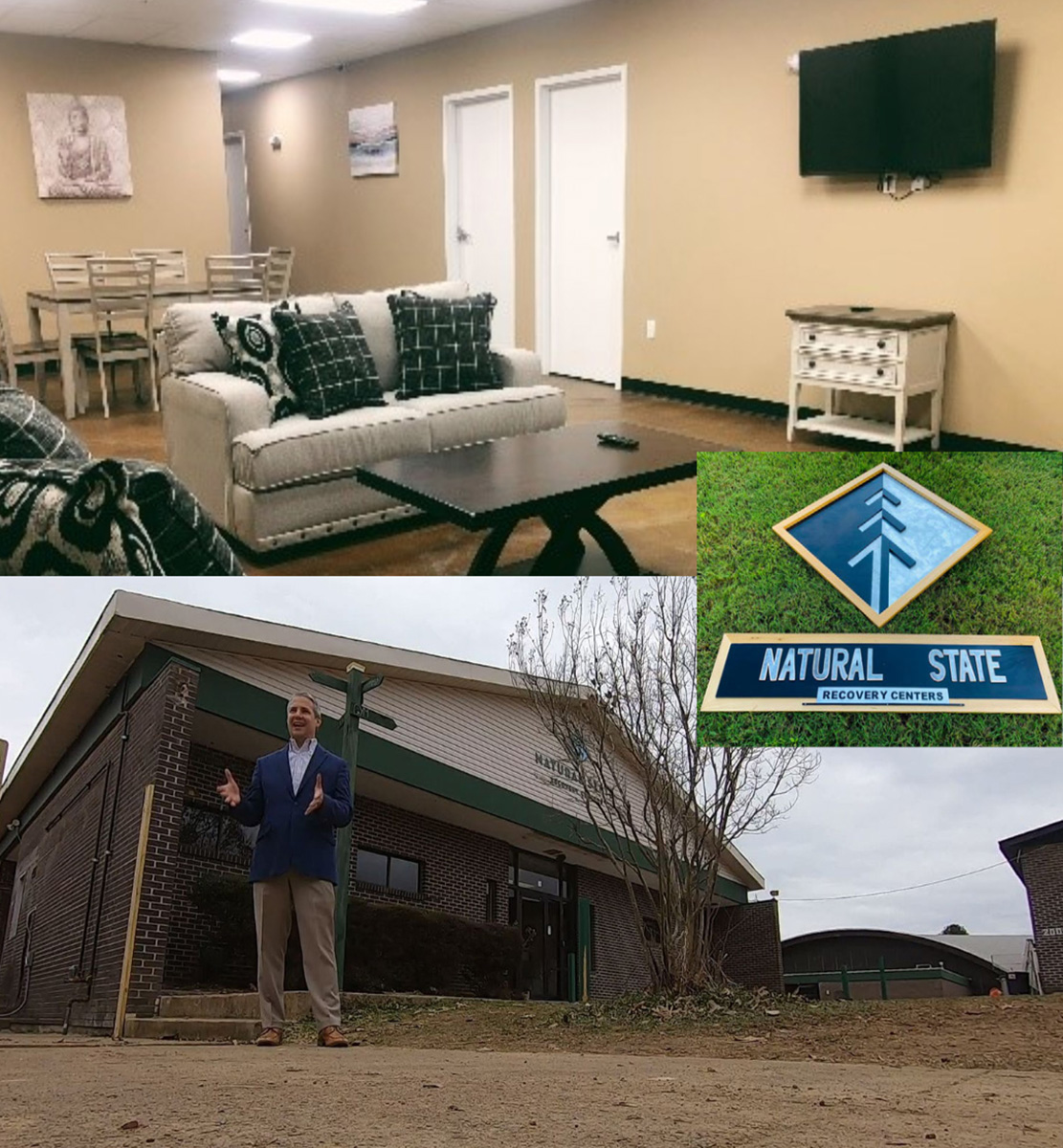
Natural State Recovery Centers (NSRC) has just opened the only drug and alcohol addiction treatment center in Arkansas to offer all levels of care, treating people from crisis to sustainability.  It is no secret that Arkansas, along with other states in the southern region of the United States are lacking the levels of care that are necessary for treating drug and alcohol addiction. Natural State Recovery is on a mission to change that by transforming the former Oak Grove High School Campus in North Little Rock. With the addition of detox and residential services, NSRC will be a full-service program assisting families and their loved ones in the pursuit of recovery from addiction.

The goal at NSRC is to remove the many barriers adults face when putting their lives back together by offering a holistic approach to addiction treatment. An important part of the rehabilitation program is that they provide these and other necessary tools for their clients’ lasting recovery. The team at NSRC completely understands what it takes to recover from addiction. In fact, many of the team members can personally relate to their clients by virtue of having gone through the ongoing process of recovery, themselves. “When we normalize the conversation surrounding addiction, people will feel more comfortable seeking help. The quicker we can change how we view addiction, the sooner we can eliminate unnecessary judgements on people who simply need help. Individuals seeking treatment are not bad people trying to get good, they are sick people trying to get well,” says CEO, Christopher Dickie.

You will immediately notice some features that set them apart from other providers:

  • All levels of care in one place: Medical Detox, Residential, Outpatient and Sober Living
  • Nationally accredited and State licensed
  • Highly trained and passionate medical staff 24/7
  • Medication for Opioid Use Disorder (Suboxone and Vivitrol) for those who qualify
  • Yoga/ Meditation and Fitness/ Nutrition focused
  • Life Skills and Vocational Training
  • Peer Support Specialists


For those interested in seeking help, please call (501) 319-7074 or visit our website at www.naturalstaterecovery.com

Texarkana Officer Saves Toddler’s Life, Naloxone Reverses Overdose

A 2-year-old boy’s life was saved by the quick actions of Texarkana police officers Sunday night. Texarkana Interim Police Chief Kristi Bennett credits the continued training of officers and naloxone kits, both of which were provided by the Criminal Justice Institute, Blue and You Foundation, and the Office of Arkansas Drug Director.

“This incident reveals the importance of officers having the training and resources available to them during these types of situations,” Bennett said. “Officer (Marcos) Luna’s quick thinking and assessment of the situation, along with his training ultimately saved this child’s life. I could not be more proud of Officer Luna and the job he did!”

Just before 10 p.m. Sunday, February 14, 2021, emergency responders were called to an apartment complex on Links Drive. Upon arrival, a 2-year-old boy was found on a couch losing conscience. The mother told officers that she had placed a 10mg Percocet on the counter, but did not see the child take it. She reported seeing the boy “chewing on something white and foamed around his mouth” and called 911 after noticing the boy lose consciousness. The report said she later found a partially consumed pill.

While emergency personnel provided stimuli to the child, Officer Luna grabbed a Naloxone kit and administered one dosage in the child’s right nostril. A few seconds later, the child regained consciousness.

“He proceeded to sit up and act cranky, but otherwise normal,” Officer Luna reported.

The child was later transferred to Wadley Regional Medical Center for further evaluation.

“I am so proud of the heroes from the Texarkana Police Department,” said Arkansas Drug Director Kirk Lane. “This incident not only demonstrates the importance of being equipped with Naloxone, but also of our Drug Take Back program that educates Arkansans to monitor, secure, and safely dispose of their medications.”

Naloxone, an opioid antagonist, is a medication used to reverse the effects of an opioid-induced overdose. Though it should be used in an emergency situation (a suspected opioid overdose), Naloxone has no effect on non-opioid overdoses. Naloxone is available for purchase at some pharmacies throughout Arkansas. Prescription medicines pose a danger to people, pets, and the environment if the medications are not disposed of properly. The Office of the Arkansas Drug Director works closely with the DEA in the coordination of this growing coalition, and in maintaining the Artakeback.org website.

One key to its success is the ability to have permanent collection boxes located at key locations throughout Arkansas communities. This allows the public to dispose of their unwanted medications throughout the year. Currently, Arkansas has more than 250 permanent collection boxes, with at least one in every county in Arkansas. The state ranks second in the nation for over-prescribing opioid medications at 114.6 opioid prescriptions per 100 people (the national average is 66.5 prescriptions per 100 people). There’s more prescriptions in Arkansas than people.

Arkansans can visit ardrugtakeback.org/take-back/collection-sites to find Drug Take Back locations throughout the state.

10 YEAR ANNIVERSARY NETS RECORD DRUG TAKE BACK DAY COLLECTION

The 10-year anniversary of the Arkansas Drug Take Back Day set a new record for prescription medications collected with nearly 20 tons for 2020. It moved Arkansas from number 13th nationally in 2019 to 7th nationally on October 24, 2020.

Arkansas has remained in the top 15 in the amount of medications collected since the first DEA National Drug Take Back Day event started on Sept. 25, 2010. Though the state is 33rd in population with slightly more than 3 million people, Arkansas ranks 2nd nationally in pounds collected per capita and 9th in total weight collected. On October 24, 2020, 38,960 pounds of medications was collected, which equals 19.48 tons. Since the first Arkansas Drug Take Back Day on September 25, 2010, a total of 413,457 pounds of medications have been collected, which equals 206.73 tons through 10 years. Nationally, to date, 13,684,848 pounds or 6,842.4 tons of medications has been collected.

Arkansas ranked 6th nationally in the amount of law enforcement agencies participating in the semi-annual Drug Take Back Day with 197 agencies, and ranked 21st in the number of Drug Take Back Day collection sites with 91 DEA registered locations (the statistic doesn’t include the 254 permanent drop box locations where many take back day events were held.)

Arkansas continues to lead the four-state DEA region (Alabama, Arkansas, Louisiana, and Mississippi) accounting for 65% of all the medications collected. Arkansas also averages more participating law enforcement agencies than the other three states combined.

Arkansas Drug Take Back Day History

The Office of National Drug Control Policy (ONDCP), as part of its National Drug Control Strategy, called for an increase of prescription drug return and disposal programs as a means to curbing prescription drug abuse. In early 2010, a coalition led by the State Drug Director, the Attorney General, both Arkansas Districts of the U.S. Attorney’s Office, and numerous federal, local, and state agencies, prevention professionals, and private organizations, launched an ongoing education program to encourage everyone to “Monitor, Secure, and Dispose” their prescription medications.

As part of the “Monitor, Secure, and Dispose” effort, the coalition organized Arkansas’s participation in the U.S. Drug Enforcement Administration’s National Prescription Take-Back Initiative, and take back events took place on September 25, 2010, April 30, 2011, October 29, 2011, April 28, 2012, September 29, 2012, April 27, 2013, October 26, 2013,  April 26, 2014, and September 27, 2014.   DEA announced the discontinuation of the national initiative in September 2014, but an Arkansas take back event under the leadership of partners within the state was held on April 25, 2015.   DEA then reinstated the program nationally, and events since have been held on September 26, 2015, April 30, 2016, October 22, 2016, April 29, 2017, October 28, 2017, April 28,2018, October 27, 2018, April 27,2019, and October 26, 2019. [DISCLAIMER: **Collectively, there have been 18 total Arkansas Drug Take Back Day events, and 17 national events. Results from the State Take Back in Spring 2015 were rolled into the total results for National Take Back 10 held September 26, 2015.]

Due to the commitment, dedication, and effort of the Arkansas Law Enforcement Community, its partners, and the multi-agency coalition, and due to excellent participation by Arkansans in all areas of the state, the take back events have been successful above and beyond all expectations.

The 19th Drug Take Back Day resulted in a total medications collection of 985,392 pounds (492.7 tons) nationally and 19.48 tons in Arkansas. The grand total of all Drug Take Back Day events resulted in 13,684,848 pounds (6,842.4 tons) nationally, and 413,457 pounds (206.73 tons) in Arkansas.

STATISTICAL INFORMATION – National Comparison:

  • Including all 19 events:
  • Arkansas ranked #2 nationally in pounds collected per capita with 0.142 pounds per person. Maine ranked 1st with 0.31 pounds per person and Wisconsin ranked 3rd at 0.128 pounds per person.1
  • Despite being thirty-third in population among all states, Arkansas ranked #9 in total weight1
  • Arkansas ranked 7th in the amount of law enforcement agency participation with 197. Wisconsin ranked 1st with 270 agencies. Nationally, 4,153 law enforcement agencies participated.2
  • Arkansas ranked 21st in the number of DEA registered collection sites (doesn’t include the 254 permanent drop box locations where many take back day events were held.) Wisconsin ranked 1st with 290 and Ohio ranked 2nd with 266.
  • The four-state DEA region consisting of Alabama, Arkansas, Louisiana, and Mississippi pooled a total weight of 60,168 pounds for the 19th Drug Take Back Day and 629,848 pounds for all 19 Drug Take Back Day events. Arkansas, despite being the least populated of the four, accounted for 65% of the total weight and averages more participating law enforcement agencies than the other three states combined.


For Take Back 19, only:

  • Arkansas ranked #7 nationally in weight collected (Top 10: Wisconsin, Texas, Ohio, California, Massachusetts, Maine, Arkansas, Florida, Illinois, and Pennsylvania, respectively)
  • Ranked 2nd per capita. Maine ranked #1.
  • Ranked 7th in the number of Law Enforcement Agency participation.

1 Determined using 2017 census estimates.

2 Determined using data supplied by the National DEA.


STATISTICAL INFORMATION – Local Comparison

Weight Collected Per Law Enforcement Agency (Take Back 19 only):

  1. Pulaski County Sheriff’s Office ranked #1 with 1,861 pounds collected.
  2. Independence County Sheriff’s Office ranked #2 with 1,051 pounds collected.
  3. North Little Rock Department ranked #3 with 842 pounds collected.
  4. Baxter County Sheriff’s Office ranked #4 with 631 pounds collected.
  5. Benton Police Department ranked #5 with 490 pounds collected.
Miss American joins DEA, USPS to reveal Drug Free USA Forever stamp

WHAT: The Drug Enforcement Administration, joined by the U.S. Postal Service and Miss America 2020 Camille Schrier, will hold a dedication ceremony for the release of the Drug Free USA Forever stamp, coinciding with Red Ribbon Week, Oct. 23-31, to raise awareness about the dangers of drug abuse and promote drug abuse prevention.

WHEN: Tuesday, Oct. 27, 10 a.m. EDT

WHERE: DEA Headquarters, 700 Army Navy Dr., Auditorium, Rm #300, Arlington, VA
The ceremony will also be livestreamed on the U.S. Postal Service’s Facebook and Twitter pages.

WHO: Timothy J. Shea, DEA Acting Administrator; Louis DeJoy, Postmaster General and Chief Executive Officer, U.S. Postal Service; Camille Schrier, Miss America 2020; and Peggy Sapp, National Family Partnership President.

MEDIA AVAIL: AA Shea will be available, upon request, for in-person, one-on-one interviews immediately following the ceremony.
News media wishing to attend must RSVP to [email protected] in order to allow for social distancing protocols.

BACKGROUND:

The Drug Free USA Forever stamp features original artwork by Aaron Draplin. The image of a white star with lines of red, light blue and blue radiating from one side of each of the star’s five points suggests the unity that is necessary at all levels to effectively address drug abuse. The stamp’s background is dark blue. “Drug Free USA” appears above the stamp art, while the stamp’s denomination, “Forever,” appears below it. The year 2020 runs vertically along the bottom right corner of the image. The Drug Free USA stamp is being issued as a Forever stamp, which will always be equal in value to the current First-Class Mail 1-ounce price.
Greg Breeding designed the stamp and was also the typographer. William J. Gicker was the art director.
Red Ribbon Week, which takes place in schools and communities nationwide every year from Oct. 23-31, helps parents as well as teachers, business owners and neighborhood organizations promote drug abuse awareness and prevention. Red Ribbon Week was started by high school students in California following the murder of DEA Special Agent Enrique “Kiki” Camarena in Mexico in 1985.
Participants wear a red ribbon or red to symbolize their dedication to preventing drug abuse. The annual campaign is sponsored by the National Family Partnership.
News of the stamp is being shared with the hashtag #DrugFreeStamp.
For a toolkit with Red Ribbon materials and more information on how to participate in Red Ribbon events, visit the Red Ribbon Campaign page on www.dea.gov.
###


Arkansas Prescription Drug Take Back Day Celebrates 10 Year Anniversary

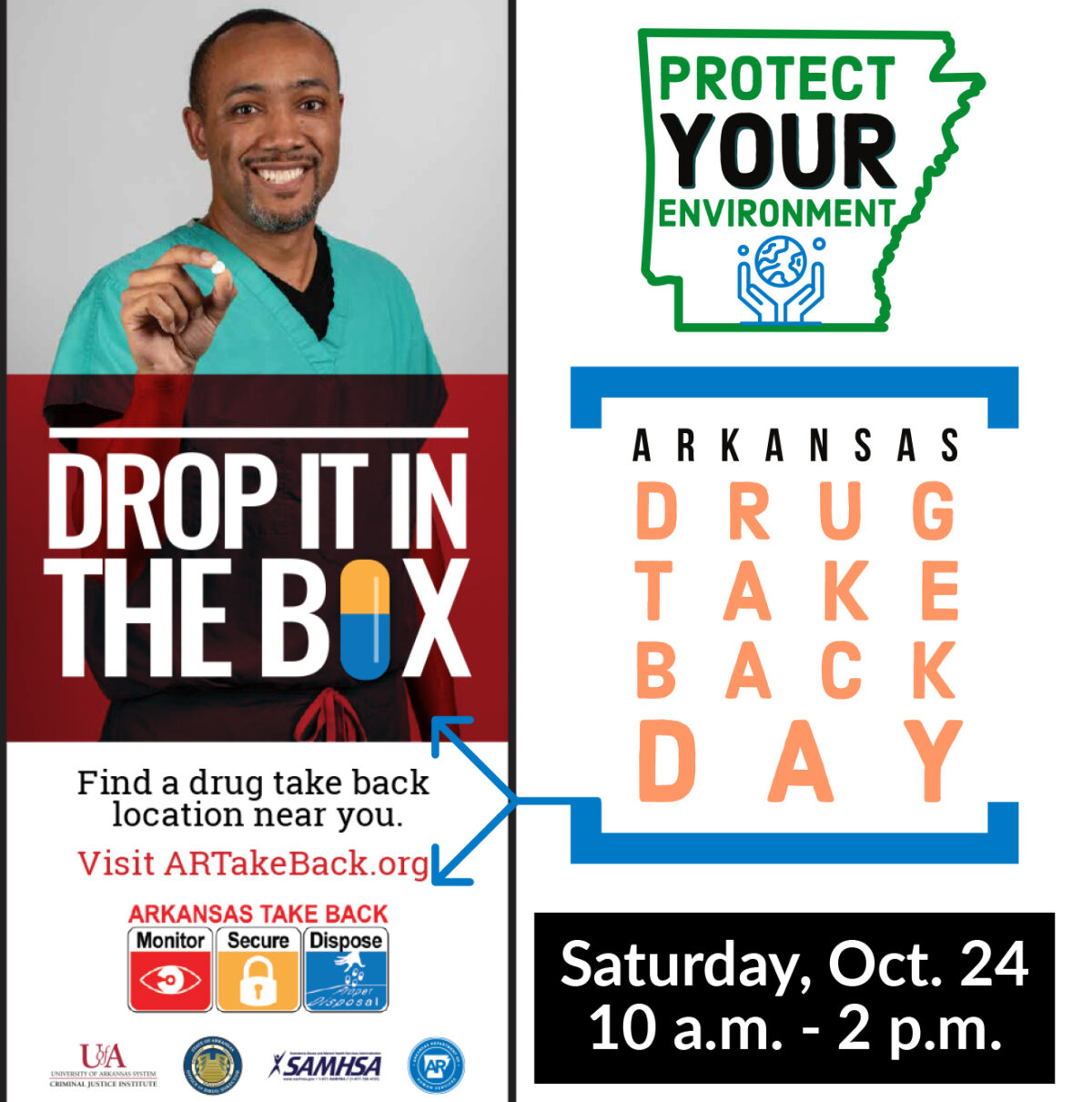
What: Arkansans are invited to celebrate ten years of protecting their families, their neighbors, and the environment by bringing unused or expired medications to more than 250 secure drop-off locations statewide.

When: Saturday, October 24, 2020, from 10:00 a.m. to 2:00 p.m.

Where: At secure collection sites statewide; full list on ardrugtakeback.org

More Info:

Prescription medicines pose a danger to people, pets, and the environment if the medications are not disposed of properly. For ten years, Arkansas Prescription Drug Take Back events have provided a safe way to collect and destroy these medications.

The U.S. Drug Enforcement Administration (DEA) organizes national Drug Take Back events semi-annually. Hundreds of Arkansas agencies have come together to partner with the DEA hosting Take Back Days in Arkansas to curb prescription drug abuse. In the past nine years, more than 187 tons of medications have been collected, and Arkansas is on track to exceed 200 tons on its 10th anniversary collection on October 24.

Arkansans can visit ardrugtakeback.org/take-back/collection-sites to find a list of over 250 secure Drug Take Back locations throughout the state and bring their unused or expired medications to a site this Saturday.

In observation of this 10th anniversary event, the Arkansas Department of Human Services and the Office of the State Drug Director thank all Federal, State, and local agency partners as well as the community organizations and public health providers who continually make Arkansas’s Drug Take Back Day one of the foremost prevention programs in the state.

Opioid Prescribing Decreased 29 Percent in Arkansas, Naloxone Access Improving, New Analysis Finds

(LITTLE ROCK, Ark.) — Prescriptions for highly addictive opioids have decreased over the last three years for Arkansans with Medicaid and private insurance coverage, according to a new analysis.

The State also is seeing an increase in prescriptions for the anti-overdose drug naloxone for those who were prescribed high-dose opioids during that time, the analysis showed. That prescription is important because anyone who uses opioids, especially for long-term pain management, is at risk of a deadly opioid overdose. Those deaths are on the rise across the country but can be prevented by administering naloxone.

“We still have work to do, but we are making progress,” said State Drug Director Kirk Lane. “Arkansas has the second-highest opioid prescribing rate in the nation, so I’m pleased to see opioid prescriptions trending downward and access to life-saving naloxone trending upward.”

The Arkansas Center for Health Improvement (ACHI) reviewed prescription data for people with Medicaid or private insurance coverage from state fiscal years 2017 through 2019. ACHI found that the number of people with opioid prescriptions dropped from 379,687 in fiscal year 2017 to 268,241 in fiscal year 2019, a decrease of 29 percent.

ACHI also found that the number of people with opioid prescriptions of 50 or more morphine milligram equivalents, or MME, per day who also received naloxone prescriptions has increased each year since fiscal year 2017. From fiscal years 2018 to 2019, the number rose from 589 to 1,556, an increase of 164%. The number of people with opioid prescriptions of 90 or more MME per day who also received naloxone prescriptions rose from 501 to 1,108, an increase of 103%.

Despite these increases, the percentage of people who received both high-dose opioid prescriptions and naloxone prescriptions was only 2.93% for people with prescriptions of 50 or more MME per day and 5.35% for people with prescriptions of 90 or more MME per day in fiscal year 2019.

“These percentages are low, and we need to get them higher, but Arkansas is moving in the right direction,” said ACHI President and CEO Dr. Joe Thompson. “I applaud the Arkansas General Assembly for passing legislation to make the life-saving drug naloxone more available to those at risk.”

Lane, who works with the Department of Human Services Division of Aging, Adult, and Behavioral Health Services, said that Act 284 of 2017 authorizes pharmacists to order, dispense, and administer naloxone under a standing prescription and order from the Arkansas Department of Health.

Data used in the analysis were from the Arkansas All-Payer Claims Database, part of the Arkansas Healthcare Transparency Initiative.

Other findings include:

  • One naloxone prescription was dispensed for every 34 individuals with opioid prescriptions of 50 or more MME per day in fiscal year 2019.
  • One naloxone prescription was dispensed for every 19 individuals with opioid prescriptions of 90 or more MME per day in fiscal year 2019.
  • Pharmacists authorized 1,130 out of 3,137 naloxone prescriptions, or 36 percent, in fiscal year 2019.

View a data brief and two infographics containing the findings on ACHI’s website at https://achi.net/newsroom/achi-analyzes-trends-in-naloxone-prescription/.

State Awarded $21 Million Grant to Grow Substance Abuse Prevention, Treatment Programs

The State has been awarded $21 million in grant funding to increase access to medication-assisted treatment for opioid and stimulant abuse, expand treatment options, and reduce opioid and stimulant overdose deaths over the next two years, the Arkansas Department of Human Services (DHS) announced Monday.
Today is the day that people across the country observe International Overdose Awareness Day.
“Arkansas is one of four states that has reduced the number of fatal drug overdoses over the past year,” Governor Asa Hutchinson said. “This confirms that our programs are working. This grant will enhance our efforts to educate and save lives.”

The State Opioid Response grant from the Substance Abuse and Mental Health Services Administration (SAMHSA) will fund 10 different projects in Arkansas that fall into one of three categories: prevention, treatment, and recovery.

“With this additional funding, we can build upon the work we’ve already done to address opioid addiction and ensure that services are available all across the state, especially in rural areas that may have limited access today,” said Arkansas Drug Director Kirk Lane, who works with the DHS Division of Adult, Aging and Behavioral Health Services (DAABHS). “Substance Use Disorder affects people from all walks of life, and it’s going to take a strategic and coordinated effort to address the problem.”

Lane said DHS is working with the University of Arkansas for Medical Sciences, the University of Arkansas at Little Rock, and Arkansas Community Correction on some of these projects. Included funding will be used to:

• Increase access to Medication-Assisted Treatment (MAT) for Opioid Use Disorder (OUD) by recruiting and supporting new MAT providers. Since staff began working on this issue a year and a half ago, the number of doctors who can provide this treatment has gone from 75 to 360.
• Continue to reduce unmet treatment and recovery needs, with a focus on rural areas of the state.
• Reduce opioid overdose deaths utilizing and empowering the use of naloxone
• Reducing the stigma that surrounds substance use disorder
• Expand the use of peer recovery work, which uses people with lived substance use disorder experiences who have been in recovery for at least two years to connect with and support others who are struggling.
• Continue outreach and education about Substance Use Disorder aimed at the aging population, college students, and prescribing communities.

10 Make History as First Peer Supervisors in Arkansas

Peer Recovery in Arkansas continues to soar to historic heights as 10 veteran Peer Recovery Specialists have been promoted to supervisor positions. Jimmy McGill, State Opioid Response Coordinator and the state’s first Peer Recovery Specialist, said the Arkansas model’s success has been so successful that other states have been taking notice, even replicating this model.

“Our supervision model has been complete less than 6 months and we’ve already shared the model with a dozen other states,” he said. “They want to follow our lead and develop similar programs. Our supervision curriculum is so detailed and thorough, and the reason this is so vital is – there has never before, in the history of workforce, been a job [created] that was based off lived experience.”

What is a Peer Recovery Specialist and what is their value to Arkansas? McGill explained that they are people with “direct lived experience with substance use, addiction and recovery and/or mental health recovery.” But in order to become a Peer Recovery Specialist, the person must have a minimum of 2-years of sustainable recovery (non-substance use) to be eligible to go into Peer Support training. After passing the training program, there is a minimum of 500 hours of workforce experience providing peer support. McGill said that during the training and workforce hours, “they are learning how to provide services, how to behave ethically, about our core competencies, our scope of practice, our core values, and fundamental beliefs that built the movement that now has America on fire.”

“You can’t disregard lived experienced, because everything learned about addiction was from our lived experience and because we allowed them to study us,” McGill said. “With a Peer Recovery Specialist, you get a passion for treatment and recovery that cannot be taught, bought or replicated. When a person in the addiction cycle meets with a Peer Recovery Specialist, they instantly identify and relate with each other.”

He added, “People in treatment and recovery programs are usually afraid to get honest because they don’t want to feel judged or maybe they will feel that someone is being condescending to them. With a Peer Recovery Specialist, the fear is immediately removed. Relatable equals transparency, and that is the key toward sustained recovery. That is also not saying that clinicians aren’t important because as a Peer Recovery Specialist, we’re not operating in a primary role as a clinician, but the two working alongside each other, that’s the dynamic duo.”

The Peer Recovery Specialists are certified by the Arkansas Substance Abuse Certification Board, which is recognized by the Office of Arkansas Drug Director; Arkansas Alcohol and Drug Abuse Coordinating Council; the Department of Human Services’ Division of Aging, Adult and Behavioral Health Services; and the University of Arkansas-Little Rock MidSouth School for Prevention and Social Work. There are currently 350 state certified Peer Recovery Specialists in Arkansas.

McGill said it was the leadership of Arkansas Drug Director Kirk Lane and Arkansas Governor Asa Hutchinson who saw the value of Peer Recovery and lead the way to the development of the Arkansas Peer Recovery Model. In fact, it was both Lane and Gov. Hutchinson who signed off on hiring McGill and other people with criminal histories, including felony records, to state positions as Peer Recovery Specialists. That historic, unprecedented leap of faith from these Arkansas leaders have saved and changed limitless number of lives. And think of how much this program has lowered crime in communities because those who often committed crimes due to substance addiction are now sober and giving back to their communities, McGill said.

“They not only saw the value of Peer Recovery Specialists, they worked with us and encouraged the model to what it is today,” he said. “The first thing we learned when we developed the Arkansas Model for Peers is that without something for Peers to work toward, a place for growth, they would burn out and find a different career. Under the leadership of our Drug Director, we developed a model that would ensure the peers have something to achieve, and the higher the climb the career ladder that also includes a wage increase.”

In the Arkansas model after a person earns certification as a Peer Recovery Specialist the next level is the Advanced Peer Recovery. In order to attain that certification, the specialist must have an additional 500 hours of workforce experience providing peer support and pass a 75-question test. That certification is only recognized in Arkansas, McGill explained.

“If you want to further your career even more, you have the option to go through the supervision model, which that credential would be a Peer Recovery Peer Supervisor,” McGill said. “That requires more tests, more training, more peer support service hours, and then you interview with A.P.A.C.T. (Arkansas Peer Advisory Committee) – a committee of seasoned peer specialists who are evaluating the candidates; they also consult with the Peer Recovery Coordinator at the Department of Human Services’ Division of Aging, Adult and Behavioral Health Services.

“And they don’t make it easy,” McGill said with a laugh. “Not everyone can do it. You might be an amazing Peer Recovery Specialist, but maybe not so much for a supervisor position. These are the best of the best Peer Recovery Specialists.”

The first 10 Peer Recovery Peer Supervisors in Arkansas are: Jimmy McGill, Lester “Les” Cupp (the second Peer Recovery Specialist in Arkansas), Bonnie Stribling, Teresa Apple, Gary Wade Carter, Gary McDougal, Misty Evans, Edward “Monte” Payne, Kyle Brewer, and Casey Copeland.

Ending Stigma Is Essential Theme At Aug. 31 Overdose Awareness Day, Event At Clinton Library Park Bridge

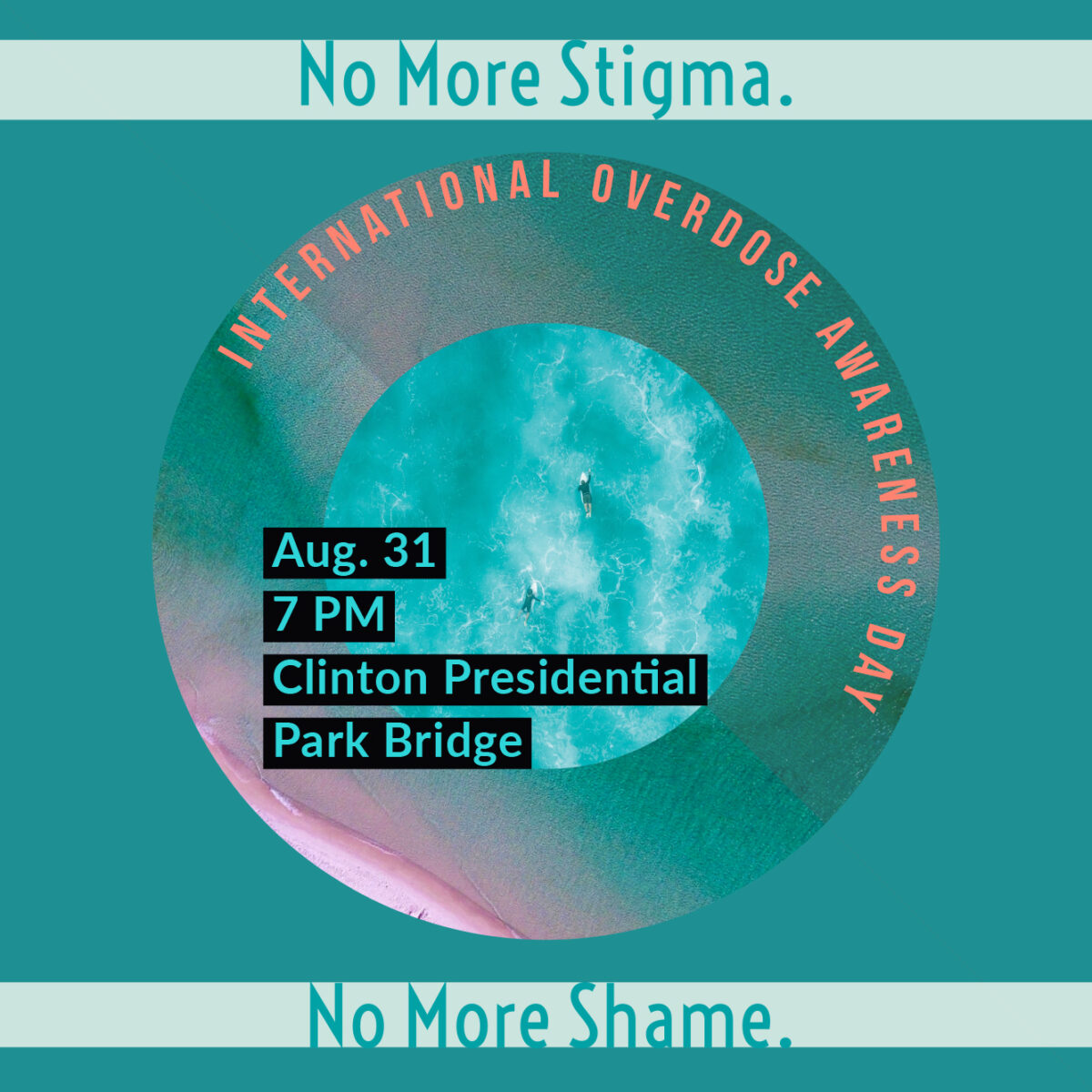
Little Rock, AR — The Parker Gill Foundation, Hope Movement Coalition and Natural State Recovery Centers is encouraging Arkansans to observe International Overdose Awareness Day, a time to remember those we have lost to drug overdose. International Overdose Awareness Day is a global event held on August 31st each year and aims to raise awareness of overdose and reduce the stigma of a drug-related death. It also acknowledges the grief felt by families and friends remembering those who have died or had a permanent injury because of drug overdose.


International Overdose Awareness Day spreads the message that overdose death is preventable. Opioid-related deaths have skyrocketed in recent years. Of the 70,980 drug overdoses that occurred in 2019 (a rise of 4.6%), more than 50,042 involved opioids, according to data from CDC.

“Addiction touches the lives of many Americans, and these deaths are completely preventable,” Christopher S. Dickie, CEO of Natural State Recovery, said in an August press release. “International Overdose Awareness Day is an opportunity for those who have lost loved ones to remember and reflect. It is also a time to reduce stigma and prevent future deaths by supporting education and advocacy efforts.”

This year on Monday, August 31th, we will meet at the Clinton Presidential Park Bridge at 1200 President Clinton Avenue, Little Rock, AR at 7:00 to observe Overdose Awareness Day. Individuals who have lost someone from an overdose will join together with individuals in recovery to stand united on the bridge to pay tribute to the lives lost and to share the hope of recovery as the bridges of Little Rock are lit purple at sunset.


The Can You See Me Now banners featured on Wake Up Central will be on display. This campaign, started by an Arkansas mom in 2019, has grown to include 2700 faces of individuals from across the United States that have lost their lives to overdose. The number of faces continue to grow as new faces are added daily.

Together Arkansas Opioid Response Initiative endorsed by Arkansas Attorney General and Drug Director

Together Arkansas, an opioid response initiative developed by the Arkansas State Chamber of Commerce/Associated Industries of Arkansas, Arkansas Blue Cross and Blue Shield, and the Arkansas Foundation for Medical Care (AFMC), has received the endorsement of Leslie Rutledge, Arkansas Attorney General, and Kirk Lane, Arkansas Drug Director. The online toolkit also features connections to new resources available to help fight the opioid crisis in the state.

“We are pleased to receive the support of two well-known Arkansans committed to addressing the opioid crisis in Arkansas,” said Randy Zook, State Chamber/AIA president and chief executive officer. “Attorney General Leslie Rutledge and Arkansas Drug Director Kirk Lane are familiar names in the fight against opioid- and substance-use disorder to help improve the health of the Arkansas workforce. As a sponsor of Together Arkansas, we are pleased to receive their validation of this important resource for employers in our state.”

Together Arkansas was launched in November 2019, a collaboration of the three entities as part of their ongoing efforts to address the opioid crisis by providing employers in the state a resource at no cost to help develop and promote a drug-free workplace. The online resource recently added connections to valuable information for employers and updated contact information for urgent help needed by employees and their families.

“At AFMC, our mission is to improve health care for all Arkansans,” said AFMC President and CEO Ray Hanley. “We are pleased to bring additional information to the online toolkit that can lead Arkansans to help and hope. And, we are happy to have Kirk Lane and Attorney General Leslie Rutledge on the side of Arkansans in this fight. Their relentless commitment to raising awareness of the issue, encouraging people who are experiencing the impact of opioid use from all perspectives to get help, and protecting the innocent in the process is recognized and appreciated.”

Together Arkansas provides employers with a toolkit of free resources to help them prepare, prevent, and respond to the opioid crisis. The online course consists of five modules (13 to 16 minutes per module) that cover legal and operational issues, best practices for drug-testing, developing policies and procedures, how to respond to an employee’s misuse of harmful drugs, where to refer an employee who needs help, and providing options for an employee to return to work.

“The opioid epidemic is one of the biggest threats to business and our economy today,” said Arkansas Blue Cross and Blue Shield President and CEO Curtis Barnett. “Not only has Kirk Lane been instrumental in raising awareness and combating the opioid crisis throughout Arkansas at the state’s highest level, he has been an important advisor for the Together Arkansas initiative. AG Rutledge has led the charge and raised the profile of helping stop illegal activity that keeps the Arkansas workforce vulnerable through opioid and other substance addiction. We’re pleased to have them carrying the banner for employers as they help their employees.”

Seventy-five percent of employers have had an issue with opioids in the workplace, according to a National Safety Council Employer Survey. In Arkansas, opioids take one life every two days and in 2017 there were 194 opioid-related deaths in the state, according to the National Institute on Drug Abuse’s (NIDA) Arkansas Opioid Summary.

To access the Together Arkansas modules or learn more about the initiative, visit www.togetherarkansas.com. For assistance, contact [email protected].