Arkansas Drug Take Back Statewide Collection Event • Saturday, Oct. 25, 2025 • Learn more →

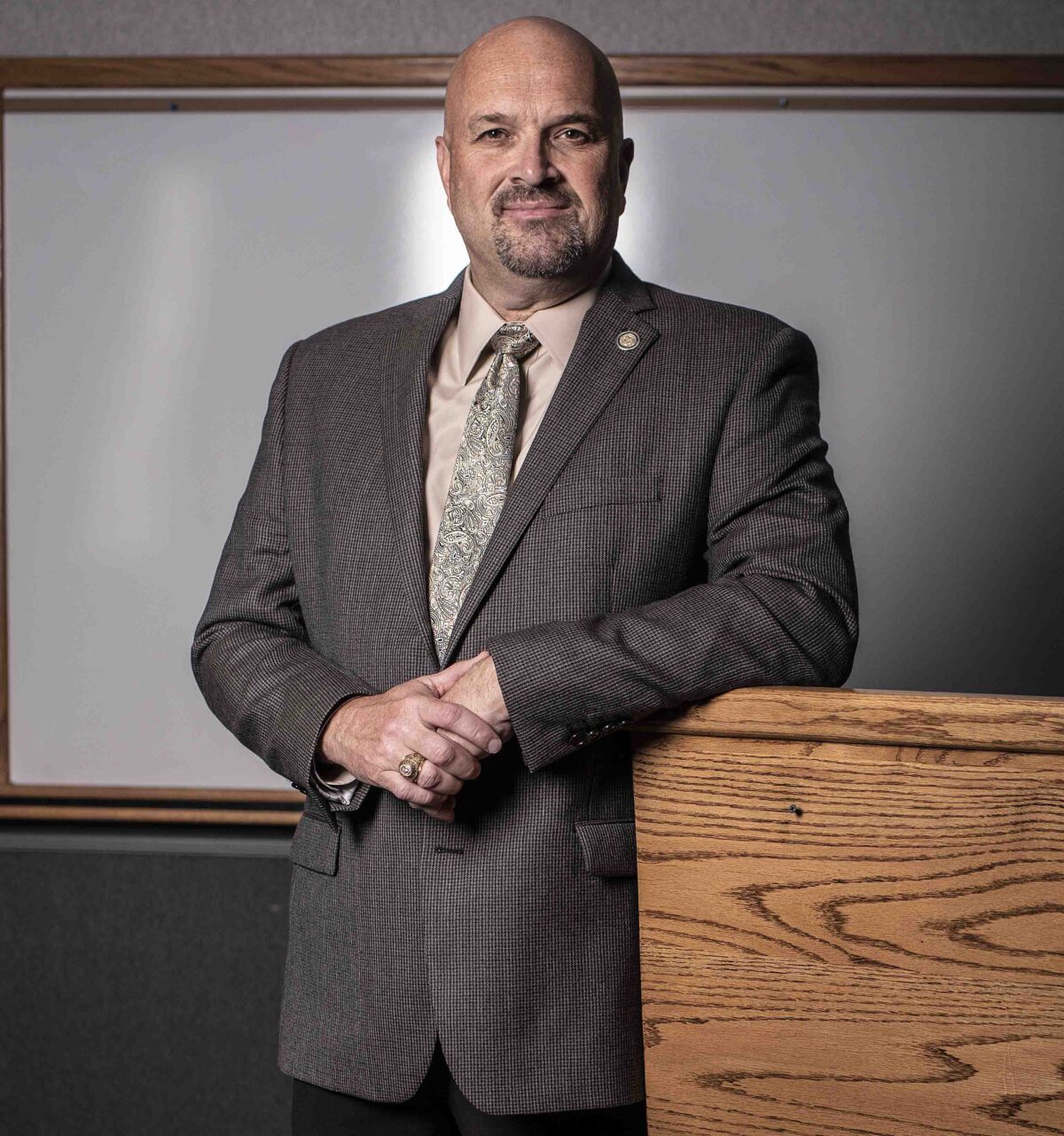
Governor Appoints Boyce Hamlet, Experienced Law Enforcement Officer, Parole Board Member, as Drug Director

Governor Asa Hutchinson has selected a long-time law-enforcement officer as the state’s new Drug Director.

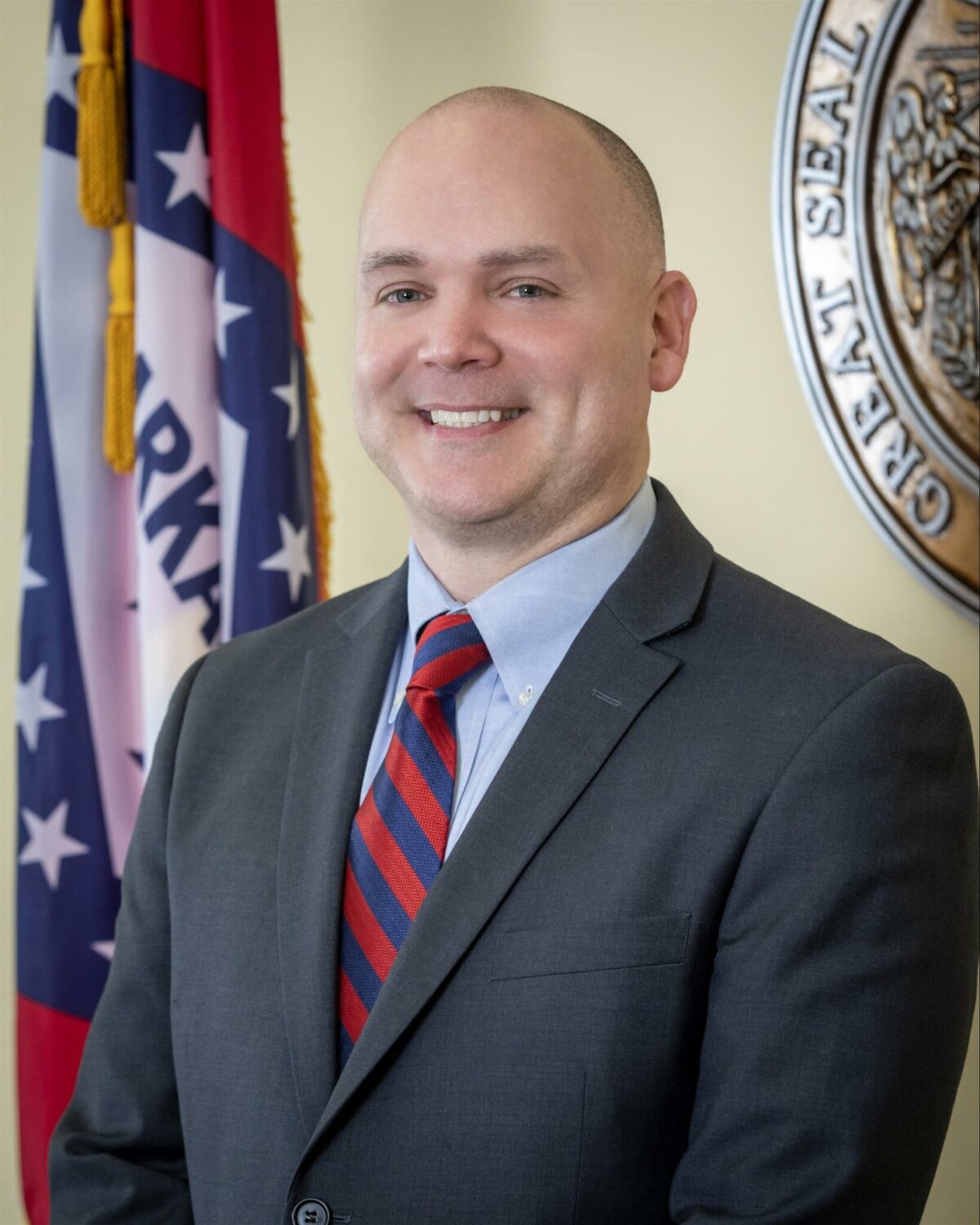
Boyce Hamlet will assume the position on August 29. He replaces Kirk Lane, drug director since July 2017, who has accepted a job as director of the newly created Arkansas Opioid Recovery Partnership.

“Boyce is a veteran in Arkansas’s fight against the plague of substance abuse in Arkansas,” Governor Hutchinson said today. “The combination of his commitment to the enforcement of law and his compassion for those caught in the cycle of substance abuse will serve Arkansas well as he continues the pursuit of our initiatives to prevent the abuse of alcohol and drugs in our state.”

Mr. Hamlet has served as chief criminal investigator for the 20th Judicial District Prosecuting Attorney and as director of the Enforcement Division of Alcoholic Beverage Control.

The Arkansas Drug Director works within the state’s Department of Human Services (DHS).

“I am excited to welcome Boyce Hamlet as the new Arkansas Drug Director,” DHS Secretary Cindy Gillespie said. “Boyce brings a wealth of experience to this role, including a background in law enforcement where he worked first-hand to combat substance misuse. I know Boyce will be a strong leader as Arkansas Drug Director, and that he will build upon the success the office has had in preventing substance abuse and saving lives. I welcome him to the position and look forward to working together.”

Mr. Hamlet grew up in Warren. He and his wife, Lydia, live in Conway. They have two children.

CONTACT: Press Shop ([email protected])

$2.5M in federal grants awarded to fund substance abuse treatments at 5 statewide faith-based treatment centers

The Arkansas Department of Human Services (DHS) and the Office of the Arkansas Drug Director today announced five recipients who will split $2.5 million in federal grants to implement statewide faith-based treatment programs.

Through a partnership with the Substance Abuse and Mental Health Services (SAMHSA), these funds will help make communities safer and healthier by allowing the grant recipients to offer treatment services with a faith-based curriculum.

“Faith based initiatives are key for recovery for persons in need in Arkansas,” said Arkansas Substance Abuse Treatment Director Deborah Motley-Bledsoe. “Treatment is effective, and we believe that this funding will change lives.”

These following awardees will each receive $500,000 grants:

Better Community Development in Little Rock

SOZO Recovery Center in Jessieville

Safe Haven in Clarksville

Arkansas Recovery Ministries (ARM) 180 in DeWitt

Daughters of the Other Side in Higginson

Applicants were asked to describe the proposed faith-based treatment initiative to be implemented, and applications were reviewed and scored by an impartial group of evaluators and awarded to these five programs.

Faith is the base of these programs’ treatment and recovery plans, with a goal to strengthen the spiritual foundation so that the patient can maintain their personal sobriety through residential services, faith services, education, prevention, harm reduction, recovery support, life skill development, employment readiness skills and both clinical and non-clinical services.

“A faith-based treatment recovery center is like any other type of rehab center,” Motley-Bledsoe said. “The purpose is the same, helping people fight substance use disorder, but the approach is different.”

DHS and the Office of the State Drug Director thank all Federal, State, and local agency partners as well as the community organizations and public health providers who continue to support persons seeking recovery and share information to help people seek treatment.

To find more treatment information and locations near you, visit. https://ardrugtakeback.org/substance-abuse-treatment/

For more information and resources, visit https://humanservices.arkansas.gov/divisions-shared-services/aging-adult-behavioral-health-services/samh-treatment/

28,000+ Pounds of Medications Collected On Arkansas Drug Take Back Day

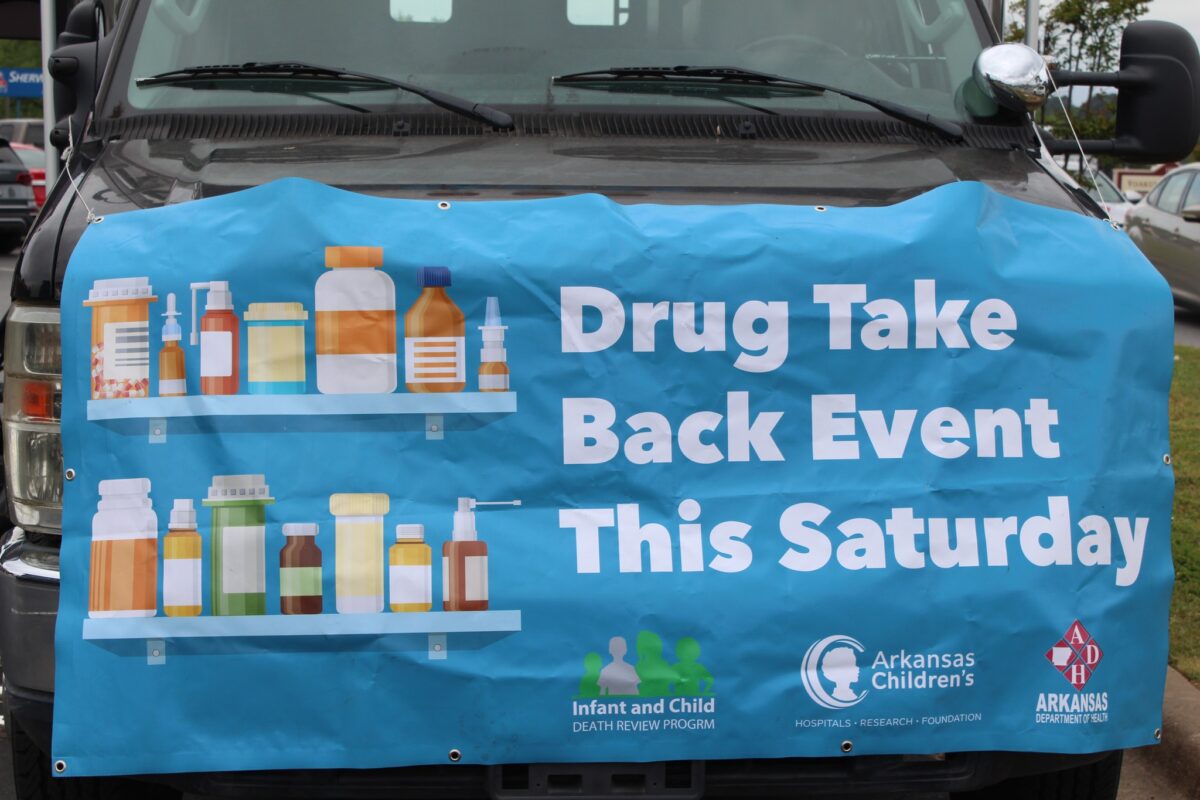
Arkansans are once again proving commitment to the mission of the Drug Take Back program and saving lives. In four hours, 126 Arkansas law enforcement agencies collected 28,480 pounds (12.92 tons) of medications during the 23rd Arkansas Drug Take Back Day. [Statistics from the national DEA sponsored Drug Take Back Day on April 30, 2022, are not completed.]

Since the start of the program in 2010, agencies have collected more than 246 tons of medications. All medications are transported via the Arkansas National Guard and DEA to a commercial facility for incineration in an environmentally safe method.

“We are grateful for everyone who participated across the state for another successful event that will save countless lives,” said Arkansas Drug Director Kirk Lane. “The continuous success is due to dedicated Arkansans and our partnerships. Please don’t forget that if you missed this event, we have permanent drop boxes throughout Arkansas were the expired and unneeded medications can be properly disposed.”

There are 268 permanent Drug Take Back drop boxes (some available 24/7) in Arkansas. View locations at www.ardrugtakeback.org or find locations specific to an area by clicking the Collection Sites tab, typing in a zip code or city name and then clicking the Filter tab.

“I am very proud of all Arkansans, who continue to help DEA save lives in ridding these unwanted and unneeded prescriptions from their cabinets at home,” said Jarad Harper, DEA Assistant Special Agent in Charge. “I am also very proud of our state, local and federal partners, who steadfastly continue to coordinate and collaborate in making the DEA National Prescription Drug Take Back Day a huge success here in Arkansas!”

The top 10 collections by law enforcement agencies on Arkansas Drug Take Back Day were:

  1. Pulaski County Sheriff’s Office – 6,599 pounds
  2. Baxter County Sheriff’s Office – 1,408 pounds
  3. Washington County Sheriff’s Office – 1,198 pounds
  4. 8th Judicial District (Bi-State) Drug Task Force – 875 pounds
  5. Benton Police Department – 840 pounds
  6. University of Arkansas for Medical Sciences Police Department – 800 pounds
  7. North Little Rock Police Department – 748 pounds
  8. Jonesboro Police Department – 697 pounds
  9. Sherwood Police Department – 590 pounds
  10. Sebastian County Sheriff’s Office – 570 pounds

Arkansas Drug Take Back Day History

The Office of National Drug Control Policy (ONDCP), as part of its National Drug Control Strategy, called for an increase of prescription drug return and disposal programs as a means to curbing prescription drug abuse. In early 2010, a coalition led by the State Drug Director, the Attorney General, both Arkansas Districts of the U.S. Attorney’s Office, and numerous federal, local, and state agencies, prevention professionals, and private organizations, launched an ongoing education program to encourage everyone to “Monitor, Secure, and Dispose” their prescription medications.

As part of the “Monitor, Secure, and Dispose” effort, the coalition organized Arkansas’s participation in the U.S. Drug Enforcement Administration’s National Prescription Take-Back Initiative and take back events took place on September 25, 2010; April 30, 2011; October 29, 2011; April 28, 2012; September 29, 2012; April 27, 2013; October 26, 2013; April 26, 2014; and September 27, 2014.   DEA announced the discontinuation of the national initiative in September 2014, but an Arkansas take back event under the leadership of partners within the state was held on April 25, 2015. The DEA then reinstated the program nationally on September 26, 2015, and has participated semi-annually since 2016 with Drug Take Back Day events held bi-annually in April and October.

Due to the commitment, dedication, and effort of the Arkansas Law Enforcement Community, its partners, and the multi-agency coalition, and due to excellent participation by Arkansans in all areas of the state, the take back events have been successful above and beyond all expectations. All medications collected are destroyed at environmentally safe facilities across the United States. Prescription medicines are a toxic waste and pose a danger to people, pets, and the environment if they are not disposed of properly. Medicines flushed or poured down the drain end up in the waterways, affecting our drinking water.

Data from CDC’s National Center for Health Statistics indicate an estimated 93,331 drug overdose deaths in the United States during 2020, an increase of 29.4% from the 72,151 deaths predicted in 2019. In Arkansas, 547 people died from a drug overdose death in 2020.

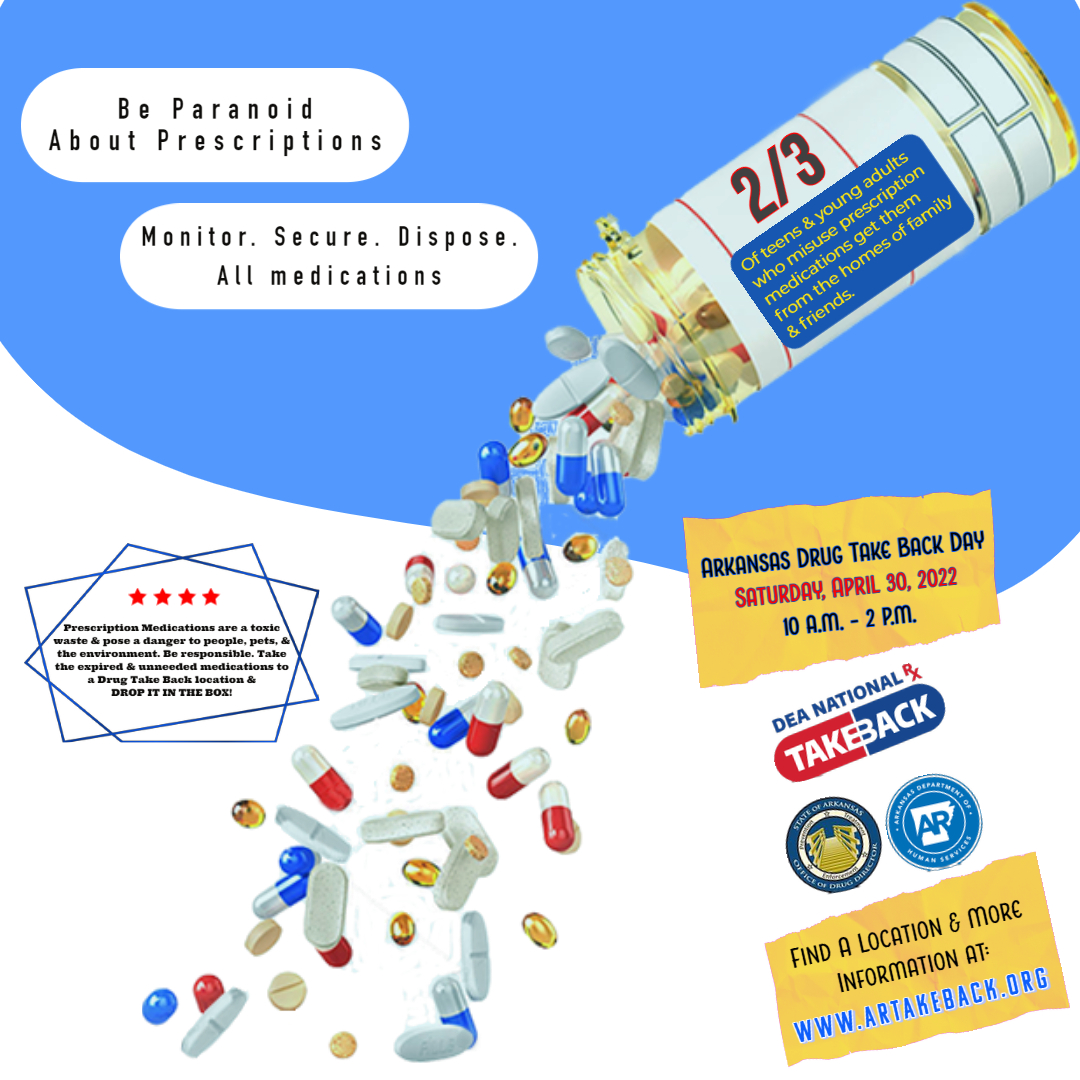
AR Drug Take Back Day is April 30

What: 23rd semi-annual Arkansas Prescription Drug Take Back Day (partnership with the DEA National Prescription Drug Take Back Day)

When: 10 a.m. – 2 p.m. Saturday, April 30, 2022

Where: At secure collection sites statewide; full list at https://ardrugtakeback.org/take-back/collection-sites/

The 23rd semi-annual Arkansas Drug Take Back Day will have nearly 300 locations across the state to encourage residents to dispose of expired and unneeded prescription medications in an environmentally safe method and it can save lives. The drug overdose epidemic in the United States is a clear and present public health, public safety, and national security threat.

In partnership with the DEA, the National Prescription Drug Take Back Day reflects DEA’s commitment to Americans’ safety and health, encouraging the public to remove unneeded medications from their homes as a measure of preventing medication misuse and opioid addiction from ever starting. The office of Arkansas Drug Director, Arkansas Department of Human Services, and the DEA is committed to making our communities safer and healthier, and we can do this by reducing overdoses and overdose deaths. While the community does its part to turn in unneeded medications and remove them from potential harm, we are doing our part to further reduce drug-related violence.

Did you know? The majority of misused prescription drugs are obtained from family and friends, often unknowingly from inside their homes.

Provisional data from CDC’s National Center for Health Statistics indicate that there were an estimated 93,331 drug overdose deaths in the United States during 2020, an increase of 29.4% from the 72,151 deaths predicted in 2019. In Arkansas, 547 people died from a drug overdose death in 2020.

“The Arkansas Drug Take Back Program is an educational program to encourage all citizens to keep their households safe,” said Kirk Lane, Arkansas Drug Director. “The more we can get people to monitor, secure and properly dispose of the medications, the more we can save lives through less accessibility of those that can intentionally or unintentionally abuse or misuse them.”

Never flush or throw medicine in the trash!

Prescription medicines are a toxic waste & pose a danger to people, pets, & the environment if they are not disposed of properly. Medicines flushed or poured down the drain end up in the waterways, affecting our drinking water. A recent study shows that 80% of U.S. streams contain small amounts of human medicines. Sewage systems cannot remove these medicines from water which is released into lakes, rivers, or oceans. Fish & other aquatic animals have shown adverse effects from medicines in the water. Even very small amounts of medicine have been found in drinking water, & recent studies have shown opioids appearing in marine animals in some areas of the U.S.

Pets can also be exposed to toxic medications when they are thrown into the trash. According to the Animal Poison Control Center, 19.7% of pet poisoning calls in 2019 were attributed to over-the-counter medications and 17.2% were attributed to human prescription medications.

The medications collected during the Arkansas Drug Take Back Day will be counted for statistical purposes and the Arkansas National Guard will later transport them to be destroyed at a facility in an environmentally safe manner.

Arkansas has remained in the top 15 in the amount of medications collected since the first DEA National Drug Take Back Day event started on Sept. 25, 2010. Though the state is 33rd in population with slightly more than 3 million people, Arkansas ranks 2nd nationally in pounds collected per capita and 9th in total weight collected. The Arkansas Department of Human Services and the Office of the State Drug Director thank all Federal, State, and local agency partners as well as the community organizations and public health providers who continually make Arkansas’s Drug Take Back Day one of the foremost prevention programs in the state.

In all previous Arkansas Drug Take Back Day events, dating back to September 25, 2010, Arkansas has collected 442,162 pounds (221 tons) and consecutively ranks in the top 15 in numerous Drug Take Back Day event categories, despite ranking 34th in U.S. population (based on the 2020 U.S. Census).

Arkansas Drug Take Back Day History

The Office of National Drug Control Policy (ONDCP), as part of its National Drug Control Strategy, called for an increase of prescription drug return and disposal programs to curb prescription drug abuse. In early 2010, a coalition led by the State Drug Director, the Attorney General, both Arkansas Districts of the U.S. Attorney’s Office, and numerous federal, local, and state agencies, prevention professionals, and private organizations, launched an ongoing education program to encourage everyone to “Monitor, Secure, and Dispose” their prescription medications.

As part of the “Monitor, Secure, and Dispose” effort, the coalition organized Arkansas’s participation in the U.S. Drug Enforcement Administration’s National Prescription Take-Back Initiative, and take back events took place on September 25, 2010; April 30, 2011; October 29, 2011; April 28, 2012; September 29, 2012; April 27, 2013; October 26, 2013; April 26, 2014; and September 27, 2014. DEA announced the discontinuation of the national initiative in September 2014, but an Arkansas Drug Take Back Day event under the leadership of partners within the state was held on April 25, 2015. The DEA then reinstated the program nationally on September 26, 2015, and participates semi-annually since 2016 with Drug Take Back Day events held in April and October.

Due to the commitment, dedication, and effort of the Arkansas Law Enforcement Community, its partners, and the multi-agency coalition, and due to excellent participation by Arkansans in all areas of the state, the take back events have been successful above and beyond all expectations.
DHS Employee Earns 40 Nurse Leaders Under 40

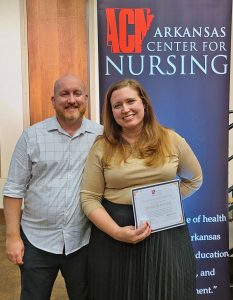
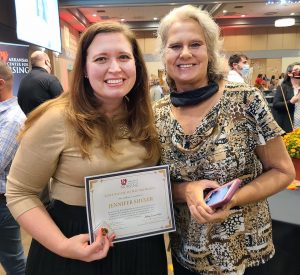
The Arkansas Center for Nursing is proud to announce the 2021 40 Nurse Leaders Under 40! Congratulations to these amazing nurse leaders!

Jennifer Shuler is an Acute Care Nurse Practitioner with 11 years of APRN experience. She graduated from Arkansas State University in 2005 with a Bachelor of Science in Nursing. After working in critical care for two years full time, she enrolled in UAMS College of Nursing seeking a Master of Nursing Science. She entered the program in Fall 2007 and graduated in December 2010. She achieved national board certification as an Acute Care Nurse Practitioner in March of 2011. She is a member of Sigma Theta Tau Nursing Honor Society and the American Association of Nurse Practitioners, as well as the Arkansas Nurse Practitioner Association.

With 19 years of clinical experience in various practice settings, Jennifer has worked as a nurse technician, LPN, RN, and APRN in direct patient care. In 2018, she transitioned to administration working at the Arkansas Department of Human Services in the Division of Aging, Adult, and Behavioral Health Services with the Treatment Team under the Arkansas Drug Director, Kirk Lane. With her provider status and varied background, she hopes to encourage other providers to become DEA waivered and provide office based opioid treatment to better the lives of Arkansans.

In her spare time, Jennifer enjoys time with her husband and daughter. With friends and family close by, she spends time with her loved ones frequently. She volunteers as a provider at Harmony Clinic, a free medical clinic in Little Rock.


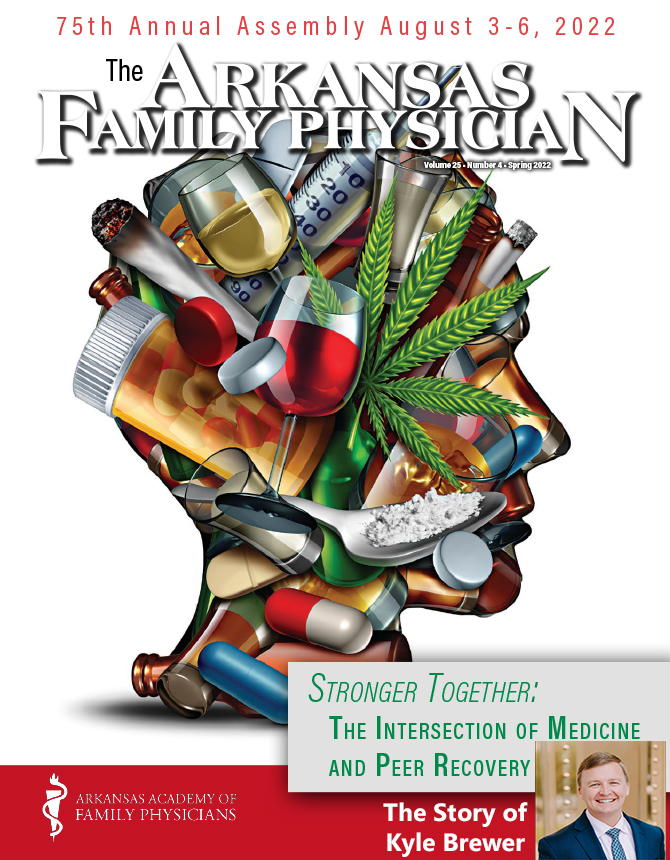
Stronger Together: The Intersection of Medicine and Peer Recovery

If you would’ve asked me five years ago what I would be doing today, I guarantee you the answer would not have been anything remotely close to writing this article and being employed by both the University of Arkansas for Medical Sciences (UAMS) and NAADAC, the Association for Addiction Professionals. In February of 2017 I returned to using heroin and prescription opioids after a brief period of abstinence. This period of abstinence was a result of my second attempt at residential treatment for a substance use disorder (SUD). My first attempt and exposure to treatment was at the age of 17. Alcoholism and drug addiction are a common denominator in my family. Watching family members drink, use drugs, fight, or get arrested was a normal part of life. I was desensitized to substance abuse and the lifestyle that came along with it. The abnormal was normal. At the age of 13, following the death of my grandmother, I slowly began my own personal journey down the road of substance use. What began as occasionally drinking alcohol quickly progressed to abusing over the counter cough medicines, like Robitussin, to eventually smoke Marijuana daily. This soon led to multiple arrests and a bad reputation. However, I maintained my attendance in school and continued making decent grades. By the time I graduated from Benton High School in 2008 I had been arrested multiple times, completed a residential SUD treatment program, and experimented with just about every drug I could get my hands on.

I was accepted to the University of Central Arkansas (UCA) and enrolled to begin my freshman year in Fall 2008. I fell in love with the college life and quickly found my place on campus. Throughout my time at UCA I excelled academically and socially. I made 3.5 and 4.0 GPAs. I was elected to President and Vice-President positions in my fraternity and other campus organizations. On the surface it appeared that I was doing everything I should be doing and doing it at a very high level. Underneath the surface there was a darker narrative unfolding. During my freshman year, I had my wisdom teeth removed. As is commonplace, I received a prescription of opioids after the procedure.

Early on, I began taking the Oxycodone as prescribed to dull the pain from the surgery. This quickly escalated to calling-in refills and within two months, I developed a tolerance for the drug needing more and more of the medication to achieve the desired effect. By the time I was out of refills, I was trapped in the vicious cycle of opioid addiction. I had no idea at the time but that one Oxycodone prescription would eventually lead me to homelessness and a life controlled by a needle full of heroin and/or prescription opioids. When I began my senior year of college, I was spending $100 or more a day on prescription opioids. It was no longer about the euphoria, rush of energy or overall high. It was simply about not being sick. I needed the medication to avoid the withdrawal symptoms and maintain the image that I was doing good. I limped through my senior year and graduated from UCA in 2013. The irony of it all is that I graduated with a Bachelor of Science in Addiction Studies. I thought I was fooling the world but in reality, I was only fooling myself.

I would end up spending the next four years living with a timer in my head. The timer told me when I needed to use to keep the withdrawal symptoms away. I would do things I never thought I would do. Go places I never thought I would go. And hang out with people I never thought I would be around. I graduated from taking opioids orally to snorting them to eventually intravenously using heroin. It destroyed every aspect of my life. My relationships with friends and family were broken and strained. I was arrested multiple times for a variety of reasons such as driving while intoxicated and theft of property. I totaled two vehicles and burned every bridge to the point that I would eventually become homeless. This brings me
back to 2017.

Read the rest of the story here: https://ardrugtakeback.org/wp-content/uploads/2022/03/Kyle-Brewer-Stronger-Together.pdf

12+ Tons of Medications Collected On Arkansas Drug Take Back Day To Be Safely Destroyed

More than 12 tons of medications were collected at the 22nd semi-annual Arkansas Drug Take Back Day, nearly doubling the amount collected in Alabama, Louisiana, and Mississippi combined. In all take back day events since 2010, more than 233 tons of medications have been collected and destroyed in an environmentally safe method.

Though national numbers from DEA sponsored Drug Take Back Day on October 23, 2021, are not completed, it is confirmed that Arkansas collected 24,680 pounds, Alabama collected 4,708 pounds, Louisiana collected 4,393 pounds and Mississippi collected 5,942 pounds of medications. Officers from 111 law enforcement agencies operated Drug Take Back Day sites across the state at 148 DEA registered locations (the DEA statistic doesn’t include the 270 permanent drop box locations where many Drug Take Back Day events were held.)

Prescription medicines are toxic waste and pose a danger to people, pets, and the environment. Dispose of expired & unneeded medications in an environmentally save method by taking them to any of the 270 permanent drop box locations in Arkansas. To find a location, visit ardrugtakeback.org, click on the Collection Sites tab and enter a zip code.

The top 10 collection sites from the Arkansas Drug Take Back Day were:

  1. Pulaski County Sheriff’s Office – 3,707 pounds
  2. Harrison Police Department – 1,747 pounds
  3. Washington County Sheriff’s Office – 1,193 pounds
  4. Baxter County Sheriff’s Office – 895 pounds
  5. Benton Police Department – 843 pounds
  6. Jonesboro Police Department – 765 pounds
  7. Texarkana Police Department – 756 pounds
  8. Sherwood Police Department – 676 pounds
  9. North Little Rock Police Department – 611 pounds
  10. Garland County Sheriff’s Department and Springdale Police Department (tied) – 600 pounds

Arkansas Drug Take Back Day History

The Office of National Drug Control Policy (ONDCP), as part of its National Drug Control Strategy, called for an increase of prescription drug return and disposal programs as a means to curbing prescription drug abuse. In early 2010, a coalition led by the State Drug Director, the Attorney General, both Arkansas Districts of the U.S. Attorney’s Office, and numerous federal, local, and state agencies, prevention professionals, and private organizations, launched an ongoing education program to encourage everyone to “Monitor, Secure, and Dispose” their prescription medications.

As part of the “Monitor, Secure, and Dispose” effort, the coalition organized Arkansas’s participation in the U.S. Drug Enforcement Administration’s National Prescription Take-Back Initiative and take back events took place on September 25, 2010; April 30, 2011; October 29, 2011; April 28, 2012; September 29, 2012; April 27, 2013; October 26, 2013; April 26, 2014; and September 27, 2014.   DEA announced the discontinuation of the national initiative in September 2014, but an Arkansas take back event under the leadership of partners within the state was held on April 25, 2015. The DEA then reinstated the program nationally on September 26, 2015, and has participated semi-annually since 2016 with Drug Take Back Day events held bi-annually in April and October.

Due to the commitment, dedication, and effort of the Arkansas Law Enforcement Community, its partners, and the multi-agency coalition, and due to excellent participation by Arkansans in all areas of the state, the take back events have been successful above and beyond all expectations. All medications collected are destroyed at environmentally safe facilities across the United States. Prescription medicines are a toxic waste and pose a danger to people, pets, and the environment if they are not disposed of properly. Medicines flushed or poured down the drain end up in the waterways, affecting our drinking water.
Provisional data from CDC’s National Center for Health Statistics indicate an estimated 93,331 drug overdose deaths in the United States during 2020, an increase of 29.4% from the 72,151 deaths predicted in 2019. In Arkansas, 547 people died from a drug overdose death in 2020.

22nd Arkansas Drug Take Back Day Is October 23, 2021

What: 22nd Arkansas Prescription Drug Take Back Day (partnership with the DEA National Prescription Drug Take Back Day)

When: 10 a.m. – 2 p.m. Saturday, October 23, 2021

Where: At secure collection sites statewide; full list at https://ardrugtakeback.org/take-back/collection-sites/

The 22nd semi-annual Arkansas Drug Take Back Day will have nearly 300 locations across the state to encourage residents to dispose of expired and unneeded prescription medications in an environmentally safe method and it can save lives.

The National Prescription Drug Take Back Day addresses a crucial public safety and public health issue. According to the 2019 National Survey on Drug Use and Health, 9.7 million people misused prescription pain relievers, 4.9 million people misused prescription stimulants, and 5.9 million people misused prescription tranquilizers or sedatives in 2019. The survey also showed that a majority of misused prescription drugs were obtained from family and friends, often from their homes. The event, in partnership with the DEA National Prescription Drug Take Back Day, provides an opportunity for communities to address substance use disorder and overdose deaths.

Provisional data from CDC’s National Center for Health Statistics indicate that there were an estimated 93,331 drug overdose deaths in the United States during 2020, an increase of 29.4% from the 72,151 deaths predicted in 2019. In Arkansas, 547 people died from a drug overdose death in 2020.

“The Arkansas Drug Take Back Program is an educational program to encourage all citizens to keep their households safe,” said Kirk Lane, Arkansas Drug Director. “The more we can get people to monitor, secure and properly dispose of the medications, the more we can save lives through less accessibility of those that can intentionally or unintentionally abuse or misuse them.”

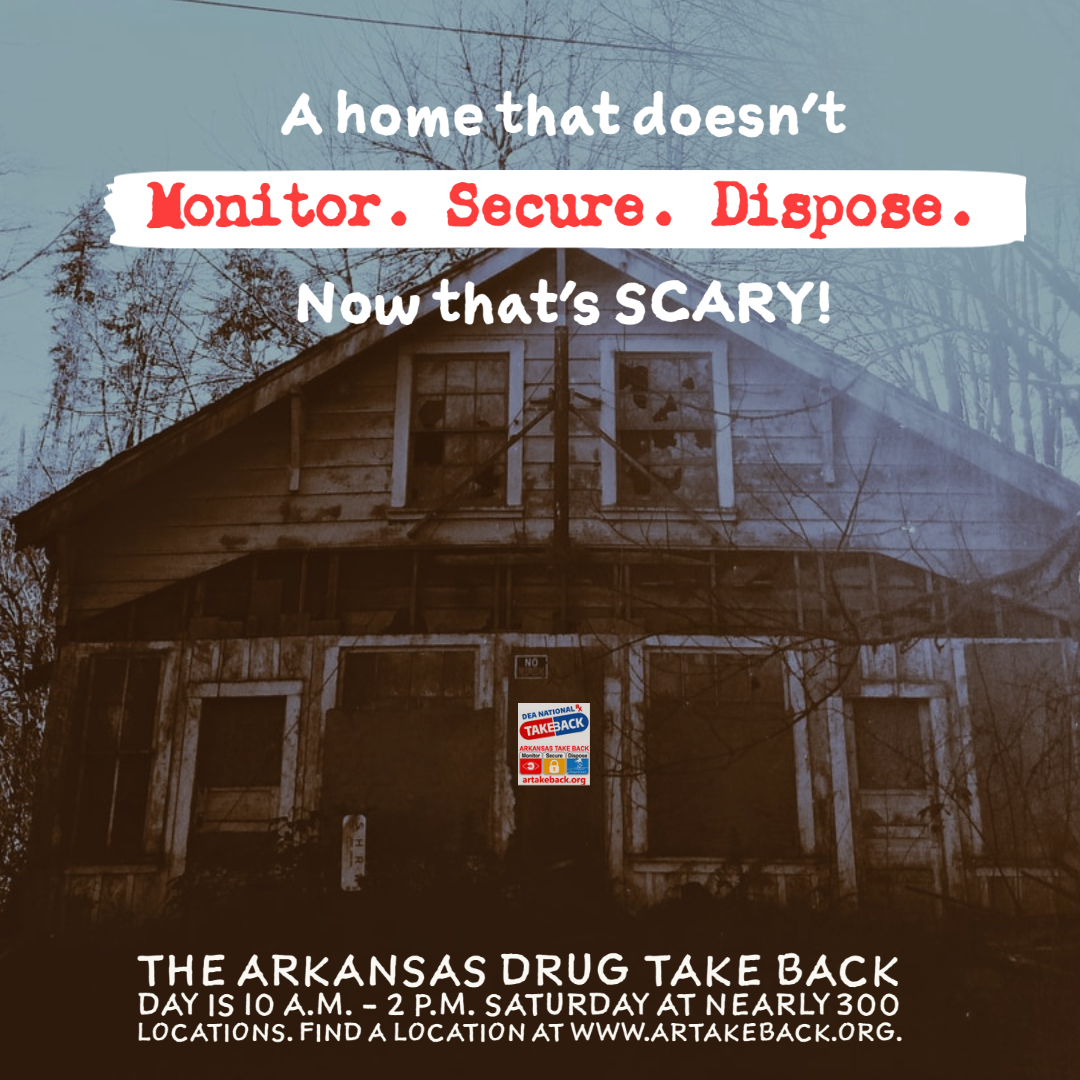
(1) Monitor – Know where you medications are and how many/much you have at all times.
(2) Secure – Lock up your medications. Don’t let them end up in the hands of someone you love to abuse them, which could even cost them their life.
(3) Dispose – The only way to properly (environmentally safe) way to get rid of expired and unneeded medications is to take them to a drug take back box or join us on Saturday, Oct. 23 for the Arkansas Drug Take Back Day at any of the 250+ locations across the state. Locations are on our website: https://ardrugtakeback.org/take-back/collection-sites/

The theme this time is focusing on the senior population – our parents and grandparents. Did you know that nearly 1 million adults aged 65 and older live with a Substance Use Disorder (SUD)? But even those who don’t have SUD can fall victim to stolen medicine and the last thing they’d want is to find out a someone in their family used their home to get their medications for illegal use.

Also, never flush medicine and don’t throw them in the trash. Prescription medicines are a toxic waste & pose a danger to people, pets, & the environment if they are not disposed of properly. Medicines flushed or poured down the drain end up in the waterways, affecting our drinking water. A recent study shows that 80% of U.S. streams contain small amounts of human medicines. Sewage systems cannot remove these medicines from water which is released into lakes, rivers, or oceans. Fish & other aquatic animals have shown adverse effects from medicines in the water. Even very small amounts of medicine have been found in drinking water, & recent studies have shown opioids appearing in marine animals in some areas of the U.S.

Pets can also be exposed to toxic medications when they are thrown into the trash. According to the Animal Poison Control Center, 19.7% of pet poisoning calls in 2019 were attributed to over-the-counter medications and 17.2% were attributed to human prescription medications.

The medications collected during the Arkansas Drug Take Back Day will be counted for statistical purposes and the Arkansas National Guard will later transport them to be destroyed at a facility in an environmentally safe manner.

Arkansas has remained in the top 15 in the amount of medications collected since the first DEA National Drug Take Back Day event started on Sept. 25, 2010. Though the state is 33rd in population with slightly more than 3 million people, Arkansas ranks 2nd nationally in pounds collected per capita and 9th in total weight collected. The Arkansas Department of Human Services and the Office of the State Drug Director thank all Federal, State, and local agency partners as well as the community organizations and public health providers who continually make Arkansas’s Drug Take Back Day one of the foremost prevention programs in the state.

In all previous Arkansas Drug Take Back Day events, dating back to September 25, 2010, Arkansas has collected 442,162 pounds (221 tons) and consecutively ranks in the top 15 in numerous Drug Take Back Day event categories, despite ranking 34th in U.S. population (based on the 2020 U.S. Census).

Arkansas Drug Take Back Day History

The Office of National Drug Control Policy (ONDCP), as part of its National Drug Control Strategy, called for an increase of prescription drug return and disposal programs to curb prescription drug abuse. In early 2010, a coalition led by the State Drug Director, the Attorney General, both Arkansas Districts of the U.S. Attorney’s Office, and numerous federal, local, and state agencies, prevention professionals, and private organizations, launched an ongoing education program to encourage everyone to “Monitor, Secure, and Dispose” their prescription medications.

As part of the “Monitor, Secure, and Dispose” effort, the coalition organized Arkansas’s participation in the U.S. Drug Enforcement Administration’s National Prescription Take-Back Initiative, and take back events took place on September 25, 2010; April 30, 2011; October 29, 2011; April 28, 2012; September 29, 2012; April 27, 2013; October 26, 2013; April 26, 2014; and September 27, 2014. DEA announced the discontinuation of the national initiative in September 2014, but an Arkansas Drug Take Back Day event under the leadership of partners within the state was held on April 25, 2015. The DEA then reinstated the program nationally on September 26, 2015, and participates semi-annually since 2016 with Drug Take Back Day events held in April and October.

Due to the commitment, dedication, and effort of the Arkansas Law Enforcement Community, its partners, and the multi-agency coalition, and due to excellent participation by Arkansans in all areas of the state, the take back events have been successful above and beyond all expectations.

Emmy-nominated filmmaker to release documentary “7 Days: The Opioid Crisis in Arkansas”

An emmy-nominated filmmaker is set to release a new documentary about the opioid epidemic in communities throughout Arkansas.

“7 Days,” an intimate documentary illustrating the effects of the current opioid crisis in Arkansas, shares stories from Arkansans who have suffered from addiction, as well as the continued fight in the state to address the issues surrounding opioid use, misuse and addiction. Produced and directed by Emmy-nominated filmmaker Nathan Willis, “7 Days” seeks to help combat the opioid crisis through education and expert sources, including medical professionals and leaders from the Arkansas Office of Drug Director, Federal Bureau of Investigation – Little Rock Office, and the Drug Enforcement Administration.
The film provides a lens into the state’s crisis, including the dangerous use of fentanyl, offering an empathetic approach to overcoming the suffering Arkansans are experiencing from opioid addiction. “7 Days” is presented through a partnership of Arkansas PBS and the Arkansas Department of Education.

Arkansas Drug Director Honored with National Award

Washington D.C. – The Annual Ramstad/Kennedy Award for outstanding leadership recognizes Arkansas Drug Director Kirk Lane for his leadership in recovery support programs across his state and nationally.  The award was established in honor of Congressmen Jim Ramstad and Patrick Kennedy. The two Congressmen have been vocal advocates of recovery support services in all forms, and championed localized efforts to support prevention, treatment, and recovery.

“Now, more than ever before, dedicated leaders like Mr. Lane are critical to combatting historic rates of overdoses and helping families to navigate the brain disease of addiction,” said former U.S. Rep. and founder of The Kennedy Forum, Patrick J. Kennedy. “It takes thoughtful, consistent action—not just words—to truly make a difference in communities. I applaud Mr. Lane for embodying the spirit of recovery in every way.”

Kathryn Ramstad, wife of Congressman Ramstad, participated in the Award presentation.  “I am deeply grateful to the Recovery Month Planning Partners for continuing to honor Jim’s legacy,” she said. “I know Jim is smiling down on you today with gratitude for all you do each and every day to spread the message that recovery is possible.”

The Substance Abuse and Mental Health Services Administration (SAMHSA) recognizes that long-term recovery is not only possible but is the goal of addiction treatment and recovery support programs. The 2021 honoree has worked to spread this positive message and the message that prevention can be effective in helping to break the cycle of addiction in families.

Kirk Lane supports proven programs such as the Arkansas Drug Take Back Day; Arkansas is the sixth in the nation in the amount of law enforcement agencies who participate in the drug take back day.  Kirk continues to be instrumental in the development and growth of Peer Recovery.  His support and belief in recovering people is the reason Peer Recovery is thriving in Arkansas.  He empowers his team to plan and host the Annual Peer Recovery Conference in September bringing together Peer Specialists and community stakeholders to learn, grow and network to support recovery sustainability.  Kirk actively participates in overdose awareness events standing in solidarity with the recovery community and family members who have lost a loved one to an overdose.

“Director Lane’s heart and support for recovery is intentional and apparent in every aspect of his office leading the Arkansas Office of Drug Director and Department of Human Services.  Together, in partnership with the dedicated organizations who comprise the Recovery Month Planning Partners, recovery success stories are becoming commonplace in Arkansas, in part because of Kirk’s on-going and exceptional leadership and commitment,” said Sis Wenger, President and CEO of the National Association for Children of Addiction (NACoA), a Recovery Month Planning Partner.”

“The Ramstad/Kennedy award is awarded to Kirk Lane a leader dedicated to support prevention, treatment and recovery in Arkansas. On behalf of over 200 collaborating organizations in the Recovery Month Planning Partners, we congratulate Kirk on his vision and commitment” said Recovery Month partner Marie Gallo Dyak, President of the Entertainment Industries Council, Inc.

Both Retired Minnesota 3rd district representative Jim Ramstad and Retired Rhode Island 1st district representative Patrick J. Kennedy also championed a mental health and addiction parity law in 2008 requiring easily accessible health insurance coverage for mental illness and addiction treatment.  Together the Congressmen sponsored Recovery Month and other programs to further therapy, treatment, and recovery services for these illnesses across the country. The award in their names honors a recipient who has shown upmost commitment in expanding the prospects for recovery of addicted persons and their families.