Arkansas Launches Peer Recovery Support Website

ARpeers.org provides critical recovery support services for Arkansans

The Arkansas Peer Advisory Committee has launched a new website that provides public access to local information on recovery support services, as well as a safe space for Peer Recovery Specialists to connect with other peers in their community. Developed in partnership with the Information Network of Arkansas (INA), ARpeers.org features recovery support news and events that are available to the public, as well as a host of features only available to Peer Recovery Specialists.

“INA and partners have developed a site to help the peer recovery community in Arkansas to stay connected and find resources to seek out and sustain sobriety,” said Kirk Lane, Arkansas Drug Director. “It is, without a doubt, going to be a key resource that will save countless lives, improve families and instill that ‘recovery works.’”

Peer Recovery Specialists who have previously completed the Arkansas Department of Human Services’ training course can access the site with their provided login information. Upon logging in, peers have the ability to create their own profile, view and contribute to news postings and events nearby, and locate and connect with peers in their area. In addition to outreach and engagement, peer recovery support services available from the site may include employment opportunities, transportation to and from treatment and recovery-oriented activities, specialized living situations, respite and crisis services and education about strategies to promote wellness and recovery.

“The ultimate weapon in recovery is one recovering person helping another,” said Jimmy McGill, Recovery Coordinator for the Office of Arkansas Drug Director. “By developing this app, INA made it possible for all recovering people in our state to be connected.”

ARpeers.org is optimized for mobile viewing and can be added to a phone’s home screen for quick access, much like other mobile apps. For more information about how to apply for Peer Recovery Specialist training, visit  https://www.midsouth.ualr.edu/daabhs/.

About Information Network of Arkansas

The Information Network of Arkansas (INA) is a public-private partnership between the state of Arkansas and the Arkansas Information Consortium (AIC) that helps state government entities Web-enable their information and services. Little Rock-based AIC is celebrating 23 years as the state’s official digital government services partner, and is part of digital government firm NIC’s (Nasdaq: EGOV) family of companies. A local tech employer, AIC was named among the 2019 “Best Places to Work in Arkansas” by Arkansas Business. INA operates Arkansas.gov, the official website of the state of Arkansas, which offers more than 950 state and local online services.

About NIC

NIC Inc. NIC Inc. (Nasdaq: EGOV) launched the digital government industry in 1992, and continues to lead it, providing a secure payment engine and thousands of digital government solutions across a network of more than 6,000 federal, state, and local government agencies. In addition, NIC is a leading provider of outdoor recreation solutions, with 1 out of 6 hunting and fishing licenses in the United States sold using an NIC service. The company created the nation’s first personal assistant for government and comprehensive mobile platform, Gov2Go®, as well as the innovative, data-driven prescription drug monitoring platform, RxGov®. More information is available at www.egov.com.

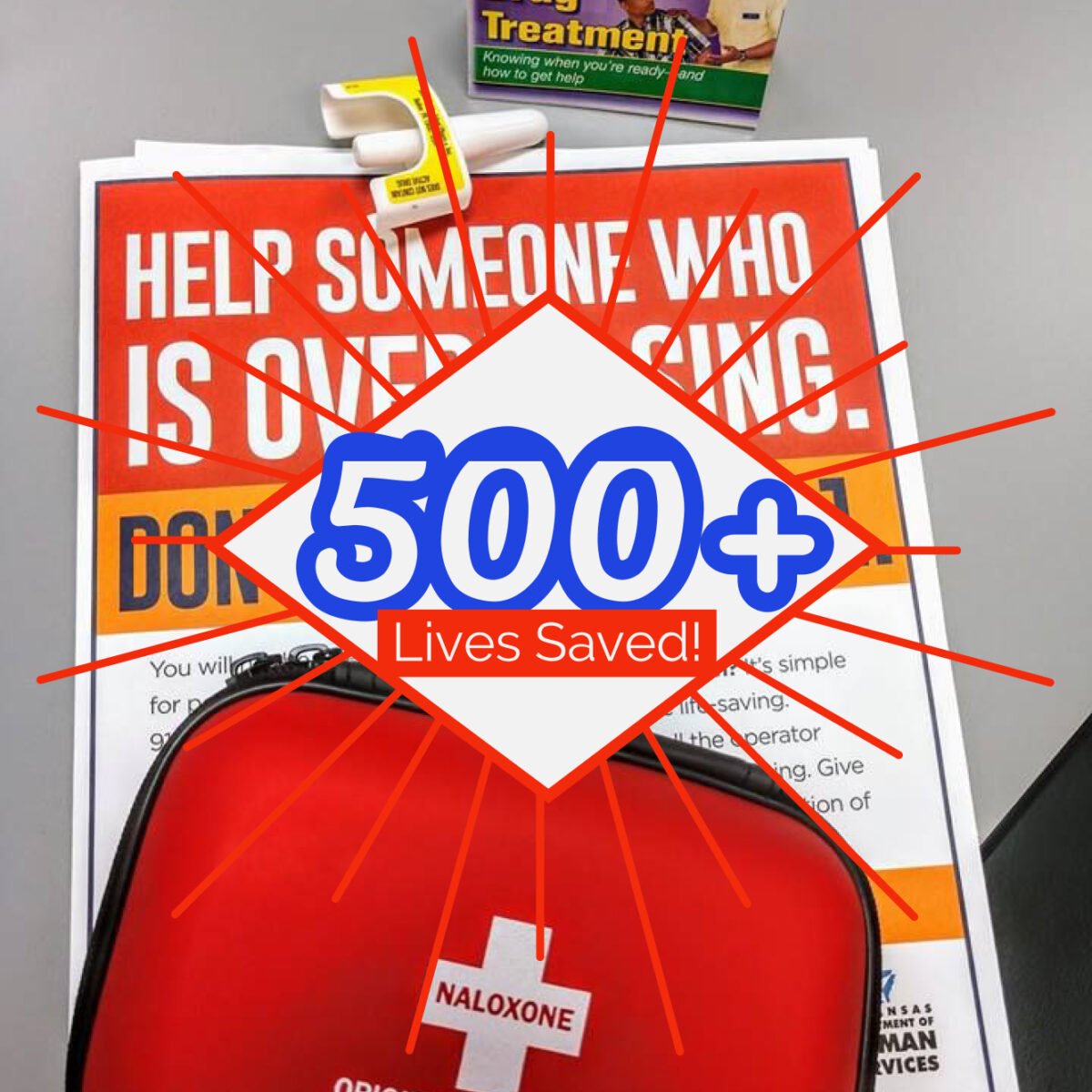
Number of overdose saves tops 500 through Arkansas program

Naloxone kits and training for law enforcement and other first responders to help them respond to life-threatening opioid overdoses have saved over 500 individuals as of the first weekend in June – a milestone that highlights the importance of the Arkansas Naloxone Project and efforts to educate Arkansans about opioid addiction.

“This was never a number we wanted to reach, but I am so thankful that this program exists because that is 500 people who got a second chance at life because of naloxone,” said State Drug Director Kirk Lane, who works with the Department of Human Services (DHS) Division of Aging, Adult, and Behavioral Health Services.

In October 2016, the Arkansas Naloxone Project began distributing the kits to law enforcement agencies, rural fire and EMS organizations, school nurses, librarians, and treatment and recovery facilities. The kits included a nasal form of naloxone called Narcan. Narcan is an FDA-approved medication used to reverse the effects of an opioid-induced overdose. The Project, which is a partnership among the State Drug Director’s Office, DHS, and the Criminal Justice Institute (CJI), has distributed over 7,000 Narcan kits and has provided training to over 8,000 first responders. The kits are funded through federal grants and private grants from the Arkansas Blue & You Foundation.

Illicit and prescription drugs that are opioids or mixed with opioids cause most overdoses and overdose deaths in Arkansas. The ability to administer Narcan has proven to be effective in reducing overdose deaths. There have been lives saved through this project in 33 of Arkansas’s 75 counties, with the most saves in Pulaski County (Arkansas’s most populous county).

Since the COVID 19 public health emergency began in March, Arkansas overdoses increased due to economic, social, and isolation pressures. The Arkansas Naloxone Project recorded 92 saves in this time period compared with 44 during the same period in 2019.

“One thing to know, especially during this time, is that people don’t have to wait for first responders to save a loved one who overdosed,” Lane said. “To reduce the chance of people dying, Governor Asa Hutchinson has issued a standing order allowing Arkansas-licensed pharmacists to sell naloxone to people who have friends and loved ones at risk of overdosing.”

Arkansas Code Annotated 20-13-604 provides immunity from civil liability to those who administer naloxone during an overdose.

To help people administer the medication, the State Drug Director’s Office and Criminal Justice Institute created the nARcansas app, which is a free opioid overdose resource that provides steps on how to administer a life-saving dose of naloxone as well as other valuable resources about opioids. Earlier this year, the app was updated to include voice directions in English and Spanish for administering naloxone.

To download the app, go Google Play or the Apple App Store. To learn more about the State’s efforts to combat opioid abuse, go to ardrugtakeback.org. To get mental health or addiction help for yourself or a loved one in Arkansas, please call 1-844-763-0198.

EMERGENCY DRUG OVERDOSE VISITS ASSOCIATED WITH INCREASED RISK FOR LATER SUICIDE

U.S. Department of Health and Human Services

NATIONAL INSTITUTES OF HEALTH NIH News

National Institute of Mental Health (NIMH) <https://www.nimh.nih.gov>

For Immediate Release: Thursday, May 7, 2020

EMERGENCY DRUG OVERDOSE VISITS ASSOCIATED WITH INCREASED RISK FOR LATER SUICIDE

NIH-funded study highlights importance of emergency department-based interventions for mitigating suicide risk

A new data analysis funded by the National Institutes of Health  finds patients who visited the emergency department for an opioid overdose are 100 times more likely to die by drug overdose in the year after being discharged and 18 times more likely to die by suicide relative to the general population. Additionally, in the year after emergency department discharge, patients who visited for a sedative/hypnotic overdose had overdose death rates 24 times higher, and suicide rates nine times higher, than the general population. The findings, published in the American Journal of Preventive Medicine, highlight the need for interventions that reduce suicide and overdose risk that can be implemented when patients come to the emergency department.

“We knew that nonfatal opioid and sedative/hypnotic drug overdoses were a major cause of disease. What these new findings show is that overdose patients also face an exceptionally high risk of subsequent death — not just from an unintentional overdose, but also from suicide, non-suicide accidents, and natural causes,” said Sidra Goldman-Mellor, Ph.D. < https://faculty.ucmerced.edu/sgoldman-mellor/>, lead study author and assistant professor of public health at the University of California, Merced.

Drug-related mortality is an ongoing public health problem. Deaths by drug overdose increased 225% between 1999 and 2015, with prescription drugs and heroin overdose accounting for the majority of these deaths. Although previous studies have detailed trends in emergency department visits related to opioid and sedative/hypnotic drug overdose, less is known about the risk of death in the year following emergency care for a drug overdose.

“We have tracked and reported patient survival for health concerns such as cancers and heart surgery for decades,” said paper co-author Michael Schoenbaum, Ph.D., a senior advisor for mental health services, epidemiology, and economics at the National Institute of Mental Health (NIMH), part of the NIH. “We improve what we measure and should be doing the same type of tracking for people with overdose or suicide risk to inform our prevention and treatment programs.”

To learn more about the risks for death that follow a nonfatal opioid overdose, a research team led by Dr. Goldman-Mellor examined discharge data for all visits to emergency departments in California between 2009 and 2011. These data were matched with death records from the California Department of Public Health, which provided information about the date and cause of death for all individuals who died between 2009-2012.

The researchers focused on patients who visited the emergency department for an opioid overdose (e.g., heroin, methadone) or for a sedative/hypnotic drug overdose (e.g., barbiturate, benzodiazepine) at least once during the 2009-2011 study period.

The data showed that for those who had visited for sedative/hypnotic drug overdose, the death rate in the following year was 18,080 per 100,000; for those who had visited for an opioid overdose, the death rate in the following year was 10,620 per 100,00 patients. The death rates for these groups were significantly higher than the death rate observed in a demographically matched group of Californians (3,236 per 100,000 people).

Eighty-eight percent of the unintentional deaths among patients who had visited for opioid overdose were caused by an unintentional overdose (1,863 per 100,000)-a rate 100 times higher than that of the general population. The suicide rate for this group (319 per 100,000 patients), which included some deaths by intentional drug overdose, was 18 times higher than that of the general population.

Sixty percent of unintentional deaths among patients who had visited for sedative/hypnotic overdose were caused by an unintentional drug overdose (342 per 100,00 patients) — a rate 24 times higher than that of the general population. Among those who had previously experienced a sedative/hypnotic drug overdose, the rate of death by suicide (174 per 100,000 patients) was almost nine times higher than the general population.

“There are already promising emergency department-based interventions that could reduce overdose and other mortality risks, such as suicide, among these patients, but such interventions need to be much more widely implemented,” said Dr. Goldman-Mellor. “Moreover, those interventions should target not just patients overdosing on opioids, but also those overdosing on sedative/hypnotic drugs, since their mortality risks were also very high.”

Dr. Goldman-Mellor indicated that although this study provides important information about the outcomes of individuals presenting to emergency departments after an overdose, the findings should be replicated in other parts of the U.S. using more recent data, as patterns of opioid and sedative/hypnotic use (and related mortality) have changed substantially over time.

Grant: MH113108 <https://projectreporter.nih.gov/project_info_details.cfm?aid=9304435&icde=49771429&ddparam=&ddvalue=&ddsub=&cr=2&csb=default&cs=ASC&pball=>

About the National Institute of Mental Health (NIMH): The mission of the NIMH is to transform the understanding and treatment of mental illnesses through basic and clinical research, paving the way for prevention, recovery, and cure. For more information, visit the NIMH website <http://www.nimh.nih.gov/>.

About the National Institutes of Health (NIH): NIH, the nation’s medical research agency, includes 27 Institutes and Centers and is a component of the U.S. Department of Health and Human Services. NIH is the primary federal agency conducting and supporting basic, clinical, and translational medical research, and is investigating the causes, treatments, and cures for both common and rare diseases. For more information about NIH and its programs, visit <www.nih.gov>.

NIH…Turning Discovery into Health — Registered, U.S. Patent and Trademark Office

DEA launches Secure Your Meds campaign, calls on Americans to keep medications safe

WASHINGTON – With families encouraged to stay at home due to the nationwide health crisis, the Drug Enforcement Administration is asking Americans to keep prescription medications safe and secure until they can properly dispose of them.

The Secure Your Meds awareness campaign addresses a vital public safety and health issue. Medicines that languish in home cabinets are highly susceptible to diversion, misuse, and abuse. The campaign also prompts families to discuss the issue of controlled prescription drug abuse.

“Protecting the health and safety of our communities is DEA’s top priority, especially during the unprecedented public health emergency,” said DEA Acting Administrator Uttam Dhillon. “With Americans at home, families need to be even more vigilant and keep prescription medications safe, secure, and out of reach of children and others in the household.”

DEA holds its National Prescription Drug Take Back Day twice a year. However, because of the current nationwide coronavirus pandemic, DEA postponed the 2020 Spring Take Back Day, originally scheduled for April 25, 2020. DEA will reschedule Take Back day for a date shortly after the health crisis recedes and national emergency guidelines are lifted.

In the meantime, DEA wants to remind Americans to clean out their medicine cabinets and secure unused, unwanted, and expired prescription medications for the next National Prescription Drug Take Back Day, on a date to be determined.

Rates of prescription drug abuse in the United States are alarmingly high, as are the number of accidental poisonings and overdoses due to these drugs. Studies show that a majority of abused prescription drugs are obtained from family and friends, including from the home medicine cabinet.

Once the Centers for Disease Control and Prevention lifts restrictions, DEA will reschedule Take Back Day.

National (and Arkansas) Prescription Drug Take Back Day Postponed

The upcoming National Prescription Drug Take Back Day scheduled for Saturday, April 25, 2020, is postponed due to the ongoing coronavirus (COVID-19) pandemic. DEA will reschedule Take Back Day for a date shortly after the health crisis recedes and national emergency guidelines are lifted.

The health and safety of our communities is a top priority for DEA. Given the overwhelming public response to past Take Back events and the anticipated large turnout for April’s event, DEA determined it would be prudent to suspend the event until safety concerns are mitigated. During this time, those seeking safe drug disposal options are encouraged to visit the DEA Diversion Control Division locator page.

Since 2010, Take Back Day events have provided easy, anonymous opportunities to remove medicines in the home that are highly susceptible to misuse, abuse, and theft. Through the National Prescription Drug Take Back Initiative, DEA, along with its partners throughout the country, has collected nearly 12.7 million pounds of expired, unused, and unwanted prescription medications. DEA will resume this important public service as soon as safely possible.

For updates and additional information on DEA’s Take Back events, please visit www.DEATakeBack.com.

Miss Arkansas Pledges To ‘Stop Stigma’ Campaign

Recent history has shown that nearly everyone, from all aspects of society, is affected by substance abuse – commonly referred to as addiction. Whether it’s family members, friends, co-workers, neighbors, congregation members, or old schoolmates, we are all surrounded by addiction affliction, and there’s probably a lot more people abusing substances around us than we truly know.

If we truly want to break the cycle, heal those in need, heal communities including the reduction of crime, save lives, and work toward the ultimate goal of “Winning the War on Drugs” it starts with the realization that there is no set standard of what an addict looks like. An addicts’ face, body and style of dress often look just like our own reflection.

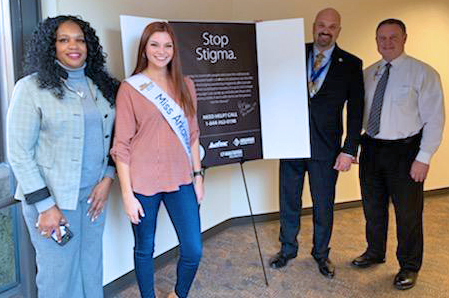
With empathetic hearts and awareness of the importance to recognize, learn and teach others about the dangers of stigma, the Office of Arkansas Drug Director and the Department of Human Services have launched the “Stop Stigma” Campaign with an early pledge from Darynne Dahlem, Miss Arkansas 2019. The campaign mission is to Stop Stigma! and change attitudes in Arkansas by securing the commitment of changing our words. By signing the campaign pledge, you will increase awareness in your community and utilize the information and resources available.

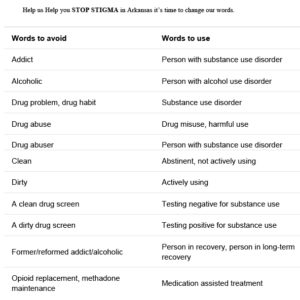
The stigma of drug use keeps people from seeking treatment. Words like “junkie,” “addict,” and “druggie” can hurt, damaging self-image and standing in the way of recovery. Addiction is not a choice. It is a chronic disease similar to diabetes, heart disease, and arthritis. Get the facts and embrace a community that needs our support.

[foogallery id=”4224″]

Some examples of Stigma:

♦ Hurtful words and labels, including junkie, loser, thief, druggie, abuser and addict.

♦ Comments such as “Once a junkie, always a junkie” or “You’re not fit to be a parent.”

♦ Perceptions, including: (a) Addiction is a personal choice (when in fact it is a disease). (b) Addiction is a sign of human weakness or lack of morals or willpower. (c) Addiction is the result of poor parenting.

♦ People in recovery with children have experienced other parents unwilling to let their children play at their schoolmate’s homes.

♦ Some communities view addiction as a crime, an act that must be penalized, versus a disease that needs treatment.

What Can We Do?

It is important to understand that opioid addiction is a treatable disease. On a personal level, we can look honestly at ourselves for signs of our own stigmas – negative, biased feelings, words or behaviors. We can make the effort to look at addiction from a different and hopefully more positive perspective.

We are all affected by the current epidemic of opioid addiction. Many people know someone who struggles with addiction or who is in treatment or recovery.

♦ We can all be part of the solution.

♦ We can take a stand against stigma.

♦ We can support treatment opportunities.

♦ We can encourage people in recovery.

♦ Most importantly, we can talk about addiction amongst our friends and family members to hopefully address the misperceptions about addiction, treatment options and long-term recovery.

♦ Each of us can commit to not using hurtful or damaging words about those who face addiction.

This Is What We Will Provide Your Organization

♦ A poster with the Stop Stigma pledge;

♦ Buttons for taking the pledge;

♦ Stop Stigma mirror cards;

♦ Copy of this language to change your words.

All That We Ask Is:

♦ Your organization sign the Stop Stigma poster;

♦ Place the poster in your business;

♦ Send us a photo of the poster being signed at [email protected]


Contact us to receive more information and learn how you can get involved at [email protected] or 501-683-5908.

Need Help? Call 1-844-763-0198

S. Dakota’s ‘Meth. We’re on it.’ campaign confuses but draws attention to growing crisis

by Leandra Bernstein [Fox 25 – Sinclair Broadcast Group]

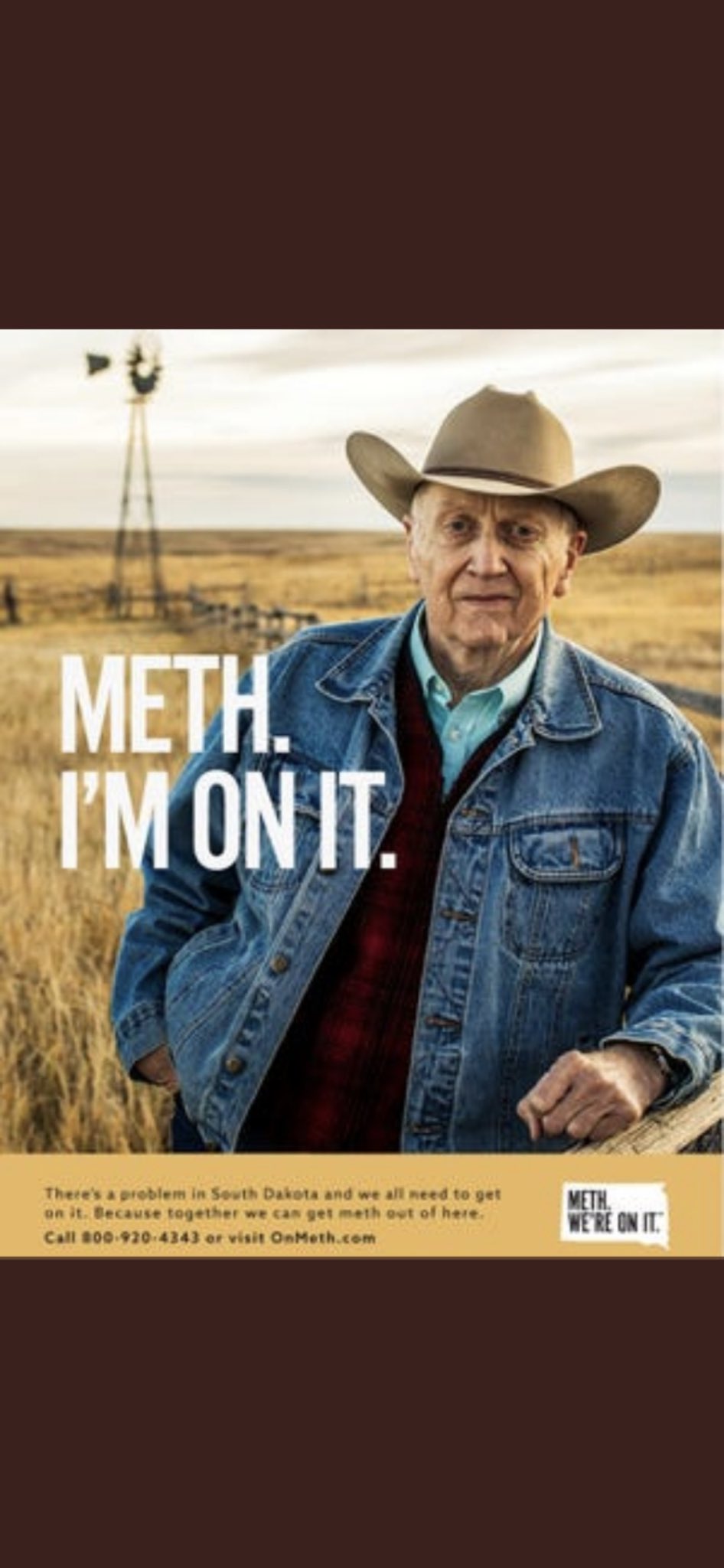
The advertisement opens with soft piano music followed by an array of South Dakotans, from an elementary school-aged girl to an elderly rancher, declaring they’re “on meth.” The camera pans across a town, an expansive prairie as the voice-over states that meth is “everyone in South Dakota’s problem. And we need everyone to get on it.”

The anti-drug campaign left many people scratching their heads.

Critics responded to the ads asking, “What were they thinking?” The campaign went viral on social media. #MethWeAreOnIt trended all day on Twitter prompting a torrent of snide comments and Breaking Bad gifs.

The fact is this cowboy is only 31, strong ad

View image on Twitter

One user compared the oddly-worded message to the late 1990s anti-drug campaign involving a pencil that read: “Too cool to do drugs” and subverted its message as students sharpened it.

Rabbi Ruti Regan ?️‍????@RutiRegan

Does remind anyone else of the “too cool to do drugs” pencil? https://boingboing.net/2014/02/25/the-story-behind-the-too-coo.html 

The story behind the “Too Cool To Do Drugs” pencil

This amusing picture, of an anti-drug propaganda pencil whose message is subverted simply by sharpening it, been doing the rounds. The truth is stranger than some of the fictions that accompany it:… boingboing.net

To South Dakota’s credit, everyone is talking about meth. For a state where the rate of methamphetamine use among 12-17-year-olds is twice the national average and where demand for meth addiction treatment has doubled in the last four years, any attention is good attention.

Amid the social media backlash, South Dakota Gov. Kristi Noem defended the campaign in a series of tweets. “Hey Twitter, the whole point of this ad campaign is to raise awareness. So I think that’s working,” the governor wrote. She followed up, “Twitter can make a joke of it, but when it comes down to it – Meth is a serious problem in SD.”

Governor Kristi Noem

@govkristinoem

Hey Twitter, the whole point of this ad campaign is to raise awareness. So I think that’s working…

⬇️⬇️⬇️https://onmeth.com

South Dakota Meth Prevention and Awareness Campaign

South Dakota has a growing meth addiction problem. Find resources for meth treatment, meth recovery, meth prevention tips, advocacy and volunteering. ww.onmeth.com

The anti-meth campaign included television commercials, radio ads, billboards and a social media campaign and cost about $450,000 according to reports. The campaign is also part of the governor’s 2020 budget request for more than $1.7 million to fund meth treatment and prevention programs.

METH NEVER WENT AWAY

Since the early 2010s, the nation’s focus has shifted from the problems of methamphetamine abuse to opioids, arguably for a good reason. Opioid overdose deaths more than doubled between 2013 and 2018, when those drugs were involved in 47,590 deaths, more than half the total overdose deaths in the country.

National Institute on Drug Abuse overdose statistics, August 2018. (NIDA.gov)

Methamphetamine overdose deaths and usage rates remained relatively stable from 2005—when meth was popularly (though falsely) considered America’s most dangerous drug—through 2013. Congress tackled the methamphetamine problem as an “epidemic” in the early 2000s. Lawmakers limited the possession, manufacture and distribution of ingredients critical in the production of crystal meth. Law enforcement cracked down on U.S. laboratories involved in cooking meth and authorities worked with Mexico to limit the export of chemicals.

It seemed that the meth problem was under control and the epidemic involving the highly addictive stimulant had subsided.

The problem never went away, however. The local manufacture of the drug decreased but traffickers in Mexico and Latin America picked up the slack and continue to do so. Between 2014 and 2019, Customs and Border Protection seizures of methamphetamine increased more than threefold. The latest data show more than 68,585 pounds of meth seized nationwide in the 2019 fiscal year. In that same period, criminal prosecutions for methamphetamine trafficking increased 20%, according to the U.S. Sentencing Commission.

Even more concerning, the meth that law enforcement officers are taking off the streets is much more potent and far less expensive than it was in previous years. The Drug Enforcement Administration reported that the price per gram of methamphetamine declined by 68% between 2008 and 2017 and the potency of the drug more than doubled from 46% purity to 93%.

DEA statistics on potency and cost of methamphetamine in the U.S. (Image: 2019 UNODC report from Global Synthetics Monitoring: Analyses, Reporting and Trends Program)

Methamphetamine abuse began to worsen around the same time as the opioid epidemic began accelerating. Overdose deaths related to methamphetamine doubled from 2013 and 2017. Opioid overdose deaths more than doubled during that same timeframe.

Dr. Wilson M. Compton, the deputy director of the National Institute on Drug Abuse (NIDA) explained the increasing trend of “overlap” in the use of methamphetamine and opioids in numerous parts of the country in recent years.

“This is a stark reminder of addressing addiction overall not just any one substance,” Compton said. “It also reminds us that methamphetamine did not go away.”

Methamphetamine abuse is still endemic in many western states and appears to be growing in other parts of the country. The Centers for Disease Control and Prevention (CDC) published a report last month identifying the regions where meth is killing more people than fentanyl or heroin. The map shows the problem is most acute in Arizona, California and Nevada followed by the region encompassing Colorado, North and South Dakota, Montana, Utah and Wyoming. The crisis also extends further north to Alaska, Idaho, Oregon and Washington.

October 2019 CDC report on regional differences in the drugs most frequently involved in overdose deaths. (Image: CDC NVSS)

In many ways, the methamphetamine crisis is regional and the resurgence has largely affected areas that were hard hit by synthetic stimulants in the past. It also disproportionately affects rural communities that often don’t have access to addiction services, making it more challenging to treat. Moreover, unlike opioid abuse, where providers can offer medication-assisted treatment, no such treatment exists for methamphetamine abuse—though researchers continue working to develop it.

AN ADDICTION CRISIS BIGGER THAN METH OR OPIOIDS

The renewed attention on the methamphetamines amid an ongoing opioid epidemic has addiction specialists advising that it’s time to develop a more comprehensive approach to the overall problem of addiction.

“What’s important and a concern to us is not just meth alone but meth in combination with opioids creating a potentially very dangerous situation,” said Erin Artigiani, a co-investigators at the National Drug Early Warning System at the University of Maryland, which monitors emerging drug use trends.

“It’s not just one particular drug or another,” Artigiani continued. For example, NDEWS researchers identified a concerning pattern where more than half of the individuals admitted for opioid addiction treatment at two facilities in Oregon were also using methamphetamine. Another study published earlier noticed the same pattern and documented a nearly fivefold increase in the use of methamphetamine among individuals being treated for heroin addiction between 2008 and 2017.

Drug users explained various reasons for using meth alongside opioids. Some falsely believed that meth was safer than opioids, an argument that Dr. Compton compared to jumping out of the frying pan into the fire. Others saw methamphetamine as a way to counter the effects of certain drugs off opioids. Many others struggled with multiple drug addictions.

Dr. Daniel Ciccarone, a professor at the University of California San Francisco school of medicine and addiction clinician, recently argued that the focus on opioids at the expense of other drugs and especially polydrug use demonstrated a “failure of public policy.”

“This is a multi-headed monster,” Ciccarone said in an interview with Addiction Professional. “Demand for drugs is a monster, continually being fed in ways that we’re not predicting. Who predicted the resurgence of methamphetamine? No one, as far as I know. Meanwhile, the average patient has gotten much sicker while we’ve been handling the opioid crisis.”

Meanwhile, South Dakota, regardless of their specific ad campaign, raised an important alert about an ongoing problem that has continued to plague many states and communities.

Addiction experts commended South Dakota for launching an awareness campaign and taking steps to make addiction resources available for hard-to-reach rural communities. Artigiani applauded South Dakota’s efforts to develop and promote a program to address the substance abuse crisis. “I’m sure, in light of the responses they’re getting on Twitter, they may be reconsidering the particular language,” she noted. “I hope they continue their outreach efforts.”

187 Tons of Medications Collected in 18 Drug Take Back Day Events

Arkansas has remained in the top 15 in the amount of medications collected since the first DEA National Drug Take Back Day event started on Sept. 25, 2010. Though the state is 33rd in population with slightly more than 3 million people, Arkansas ranks 4th nationally in pounds collected per capita and 13th in total weight collected.

To date, more than 187 tons (374,457 pounds) of medications have been collected in Arkansas. Nationally, to date, more than 11,669 tons (23,339,120 pounds) of medications have been collected.

The 18th Drug Take Back Day, held on Oct. 26, 2019, resulted in a total medications collection of 441.5 tons nationally, and 13.8 tons was collected from Arkansas. The state ranked 8th in the amount of law enforcement agencies participating in the semi-annual Drug Take Back Day with 192 agencies and ranked 13th in the number of Drug Take Back Day collection sites with 183 locations (the number doesn’t include the permanent drop box locations where many take back day events were held).

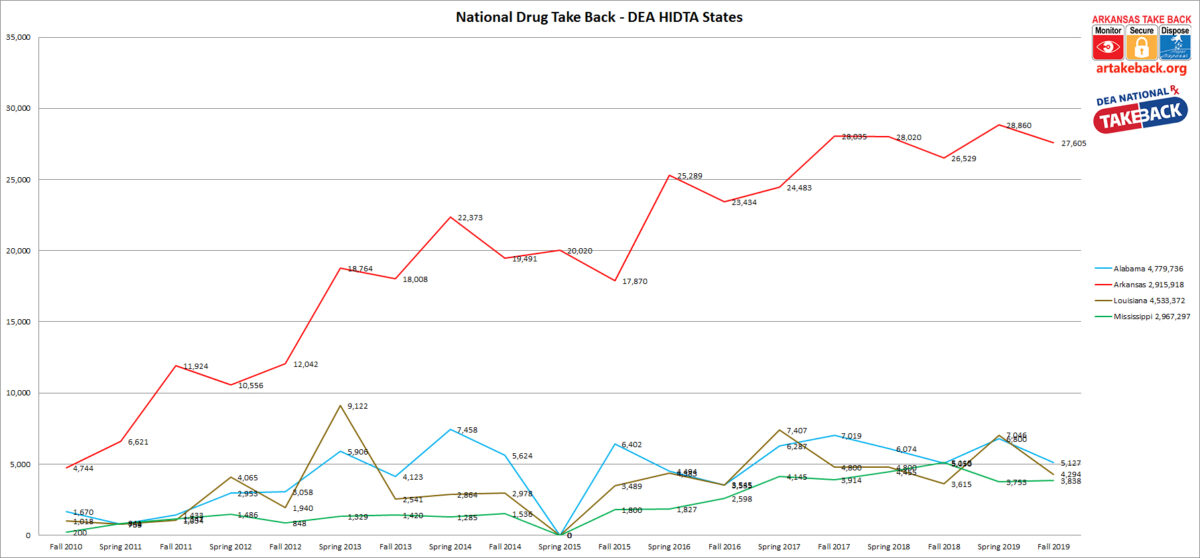
Arkansas continues to lead the four-state DEA region (Alabama, Arkansas, Louisiana, and Mississippi) accounting for 66% of all the medications collected. Arkansas also averages more participating law enforcement agencies than the other three states combined.

Arkansas Drug Take Back Day History

The Office of National Drug Control Policy (ONDCP), as part of its National Drug Control Strategy, called for an increase of prescription drug return and disposal programs as a means to curbing prescription drug abuse. Simultaneously, the Benton Police Department started a program called “Operation Medicine Cabinet” in the spring of 2010,  after Russell Goodwin, owner of a local monument company and youth baseball coach, told then Benton Police Chief Kirk Lane that he was “tired of making headstones for children” he knew due to the abuse of prescription drugs. Benton officers gathered data that showed there was a problem with abuse and misuse of prescription drugs by youth, including information from the Saline County Coroner’s Office which showed that 30 people died in 2009 as a result of prescription drug abuse.

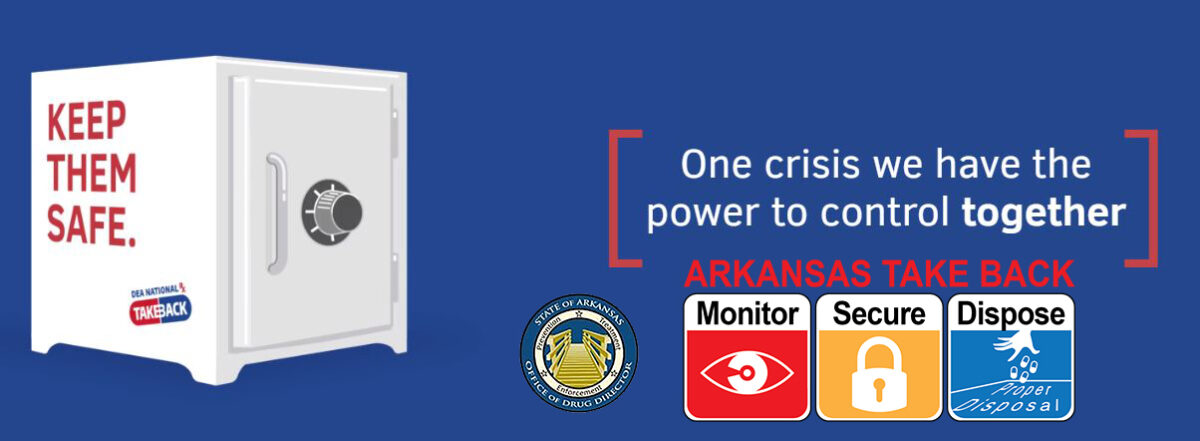
More than 146 pounds of prescription medications were collected at the first Operation Medicine Cabinet in Benton back in the spring of 2009, and the program and education to the public continued growth. State officials took notice and the program expanded. In 2010, a coalition led by then, State Drug Director Fran Flener, launched an on-going educational program to encourage everyone to “Monitor, Secure and Dispose” of their prescription medications. The also launched the website ardrugtakeback.org with an emphasis on educating and encouraging everyone to “Monitor, Secure, and Dispose” their prescription medications.

The U.S. Drug Enforcement Administration launched the National Prescription Drug Take Back Day on September 25, 2010 in response to an epidemic of controlled prescription drug (CPD) abuse in the United States.

Semi-annually a DEA Prescription Drug Take Back Day is held nationally.  Arkansas supports this with core partners from the Arkansas Governor’s Office, Arkansas Attorney General’s office, Arkansas Department of Health, Arkansas Department of Human Services, Arkansas National Guard, Arkansas Rotary Clubs, Arkansas State Board of Pharmacy, Arkansas State Police, Office of Arkansas Drug Director along with more than 130 additional law enforcement and government agencies, numerous community organizations, businesses, media outlets, and public health providers. The Office of the Arkansas Drug Director works closely with the DEA in the coordination of this growing coalition, and in maintaining the Artakeback.org website.

One key to its success is the ability to have permanent collection boxes located at key locations throughout Arkansas communities. This allows the public to dispose of their unwanted medications throughout the year. Currently, Arkansas has more than 225 of permanent collection boxes, with at least one in every county in Arkansas. To find a collection box on ardrugtakeback.org click on the Collection Sites tab (or click this link: https://ardrugtakeback.org/take-back/collection-sites/ ) and type in a zip code, choose a distance and click the filter tab.

As part of the “Monitor, Secure, and Dispose” effort, the coalition organized Arkansas’s participation in the DEA’s National Prescription Take-Back Initiative, and take back events took place on September 25, 2010, April 30, 2011, October 29, 2011, April 28, 2012, September 29, 2012, April 27, 2013, October 26, 2013,  April 26, 2014, and September 27, 2014.   DEA announced the discontinuation of the national initiative in September 2014, but an Arkansas take back event under the leadership of partners within the state was held on April 25, 2015.   DEA then reinstated the program nationally, and events since have been held on September 26, 2015, April 30, 2016, October 22, 2016, April 29, 2017, October 28, 2017, April 28, 2018, October 27, 2018, April 27, 2019, and October 26, 2019. [DISCLAIMER: **Collectively, there have been 18 total Arkansas Drug Take Back Day events, and 17 national events. Results from the State Take Back in spring 2015 were rolled into the total results for National Take Back 10 held September 26, 2015.]

Due to the commitment, dedication, and effort of the Arkansas Law Enforcement Community, its partners, and the multi-agency coalition, and due to excellent participation by Arkansans in all areas of the state, the take back events have been successful above and beyond all expectations.

The 18th Drug Take Back Day resulted in a total medications collection of 441.5 tons nationally and 13.8 tons in Arkansas. The grand total of all Drug Take Back Day events have resulted in 11,669.60 tons nationally and 187.227 tons in Arkansas.


STATISTICAL INFORMATION – National Comparison (Including all 18 events):

Arkansas ranked #3 nationally in pounds collected per capita with 0.125 pounds per person. Maine ranked 1st with 0.308 pounds per person and Wisconsin ranked 2nd at 0.126 pounds per person.1

Despite being thirty-third in population among all states, Arkansas ranked #13 in total weight1

Arkansas ranked 9th in the amount of law enforcement agency participation with 192. Texas ranked 1st with 299 agencies. Washington D.C. ranked last with 1 agency. Nationally, 4,896 law enforcement agencies participated.2

Arkansas ranked 13th in the number of collection sites with 183. Texas ranked 1st with 363 and North Dakota was last with 5.

The four-state DEA region consisting of Alabama, Arkansas, Louisiana, and Mississippi pooled a total weight of 40,864 pounds for the 18th Drug Take Back Day and 569,680 pounds for all 18 Drug Take Back Day events. Arkansas, despite being the least populated state of the DEA region accounted for 66% of the total weight. Arkansas also averages more law enforcement participation than the other three states combined.


For Take Back 18, only:

Arkansas ranked #13 nationally in weight collected (#1-#12: California, Texas, Wisconsin, New York, Illinois, Pennsylvania, Ohio, Missouri, Maine, Florida, Massachusetts, & Virginia)

Ranked 4th per capita. Maine ranked #1, followed by Vermont, and Wisconsin, respectively.

Ranked 9th in the number of Law Enforcement agencies participation.

Ranks 13th in the number of registered collection sites.

1 Determined using 2017 census estimates. 2 Determined using data supplied by the National DEA.

STATISTICAL INFORMATION – Local Comparison:

Weight Collected Per Law Enforcement Agency (Take Back 18, only):

Pulaski County Sheriff’s Office ranked #1 with 3,752 pounds collected (14% of the state’s total)

Washington County Sheriff’s Office ranked #2 with 1,496 pounds collected (5.4% of the state’s total)

Benton Police Department ranked #3 with 1,065 pounds collected (3.9% of the state’s total)

Baxter County Sheriff’s Office ranked #4 with 1,019 pounds collected (3.7% of the state’s total)

North Little Rock Police Department ranked #5 with 857 pounds collected (3.1% of the state’s total)
State Chamber, Blue Cross and AFMC unveil opioid training kit for employers

The Arkansas State Chamber of Commerce, Arkansas Blue Cross and Blue Shield, and the Arkansas Foundation for Medical Care have developed an online training kit to help employers respond to the opioid crisis.

Together Arkansas was unveiled Wednesday (Nov. 6), at the Arkansas State Chamber of Commerce/Associated Industries of Arkansas annual meeting at the Statehouse Convention Center in Little Rock. Walmart is the digital outreach sponsor.

According to a press release from the initiative, the program provides an online course of five 13-16-minute modules covering legal and operational issues, drug testing, policies and procedures development, responding to an employee’s drug abuse, referrals for employees needing help, and returning an employee to work.

The free tools and other resources are available at this link.

“Opioid-use disorder is impacting Arkansas employers of every kind – from small operations to large corporations,” said State Chamber/AIA President & CEO Randy Zook. “It is creating daily challenges for employers because it affects their greatest asset: their employees.”

The press release quotes American Action Forum in saying that the opioid crisis reduced Arkansas’ labor force by 43,400 workers between 1999 and 2015. AAF on its website says opioids reduced the labor force participation rate by 3.8% during that time period. At the same time, prescription opioids per capita in Arkansas increased 1,946 percent during those years. Meanwhile, opioid dependency resulted in a loss of 574 million work hours. The majority – 327 million – involved absent female workers.

AAF’s website says opioid-use disorder resulted in the state’s economy losing $33.5 billion in real economic output during those years, reducing the state’s gross domestic product growth rate by 1.7%. The state’s economy grew 1.5% annually during that time, meaning it would have grown twice as fast were it not for opioids.

American Action Forum is a nonprofit organization that, according to its website, “proudly leads the center-right on economic, domestic, and fiscal policy issues.”

The Together Arkansas release quoted a National Safety Council Employer Survey saying that 75% of employers have had an issue with opioids.

DEA issues warning over counterfeit prescription pills from Mexico

WASHINGTON – The Drug Enforcement Administration is alerting the public of dangerous counterfeit pills killing Americans. Mexican drug cartels are manufacturing mass quantities of counterfeit prescription pills containing fentanyl, a dangerous synthetic opioid that is lethal in minute doses, for distribution throughout North America.

Based on a sampling of tablets seized nationwide between January and March 2019, DEA found that 27 percent contained potentially lethal doses of fentanyl.

“Capitalizing on the opioid epidemic and prescription drug abuse in the United States, drug trafficking organizations are now sending counterfeit pills made with fentanyl in bulk to the United States for distribution,” said DEA Acting Administrator Uttam Dhillon. “Counterfeit pills that contain fentanyl and fentanyl-laced heroin are responsible for thousands of opioid-related deaths in the United States each year.”

Fentanyl and other highly potent synthetic opioids remain the primary driver behind the ongoing opioid crisis, with fentanyl involved in more deaths than any other illicit drug.

A lethal dose of fentanyl is estimated to be about two milligrams, but can vary based on an individual’s body size, tolerance, amount of previous usage and other factors. The full Fentanyl Signature Profiling Program Report on the recent drug sampling and testing is available here: https://admin.dea.gov/sites/default/files/2019-10/DEA_Fentanyl_Signature_Profiling_Program_Report-Oct-2019.pdf.