S. Dakota’s ‘Meth. We’re on it.’ campaign confuses but draws attention to growing crisis

by Leandra Bernstein [Fox 25 – Sinclair Broadcast Group]

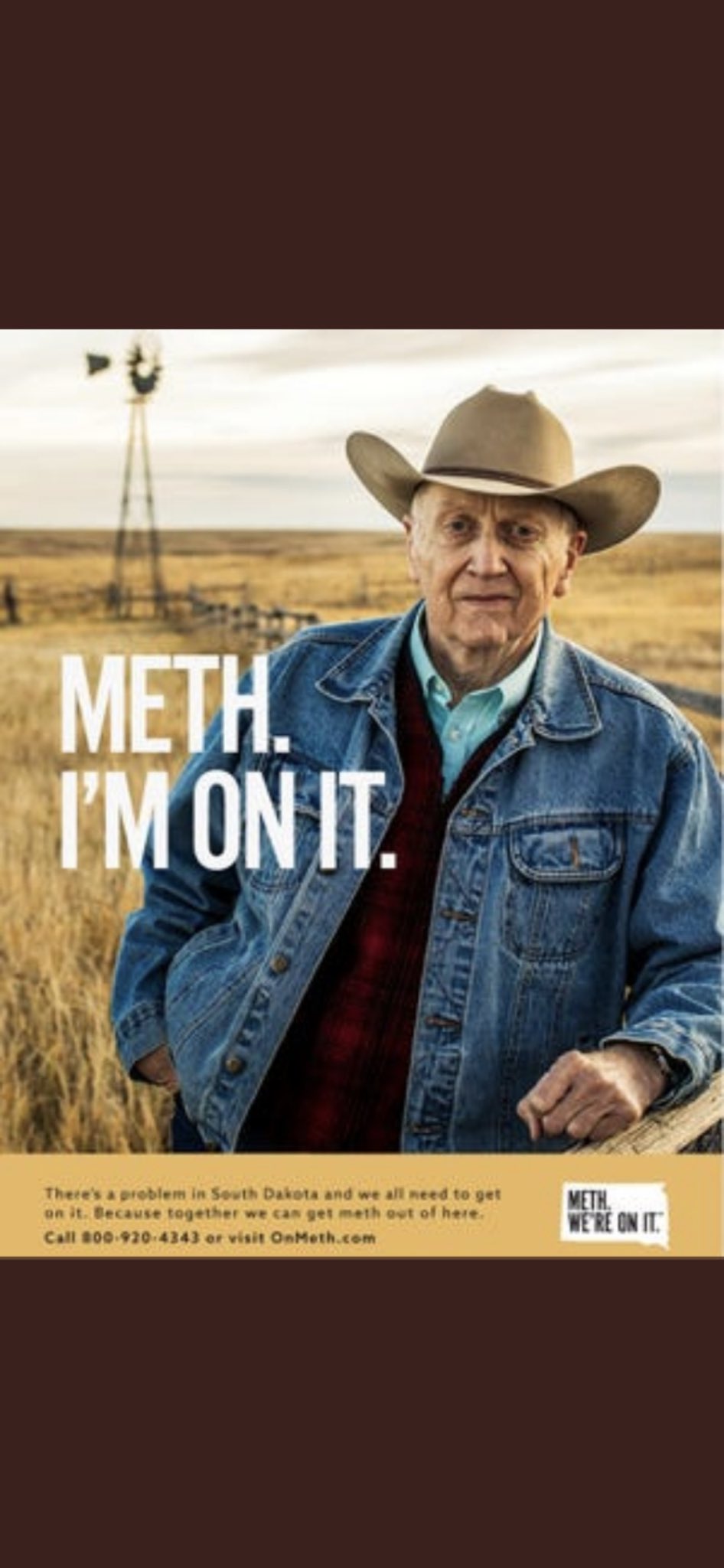
The advertisement opens with soft piano music followed by an array of South Dakotans, from an elementary school-aged girl to an elderly rancher, declaring they’re “on meth.” The camera pans across a town, an expansive prairie as the voice-over states that meth is “everyone in South Dakota’s problem. And we need everyone to get on it.”

The anti-drug campaign left many people scratching their heads.

Critics responded to the ads asking, “What were they thinking?” The campaign went viral on social media. #MethWeAreOnIt trended all day on Twitter prompting a torrent of snide comments and Breaking Bad gifs.

The fact is this cowboy is only 31, strong ad

View image on Twitter

One user compared the oddly-worded message to the late 1990s anti-drug campaign involving a pencil that read: “Too cool to do drugs” and subverted its message as students sharpened it.

Rabbi Ruti Regan ?️‍????@RutiRegan

Does remind anyone else of the “too cool to do drugs” pencil? https://boingboing.net/2014/02/25/the-story-behind-the-too-coo.html 

The story behind the “Too Cool To Do Drugs” pencil

This amusing picture, of an anti-drug propaganda pencil whose message is subverted simply by sharpening it, been doing the rounds. The truth is stranger than some of the fictions that accompany it:… boingboing.net

To South Dakota’s credit, everyone is talking about meth. For a state where the rate of methamphetamine use among 12-17-year-olds is twice the national average and where demand for meth addiction treatment has doubled in the last four years, any attention is good attention.

Amid the social media backlash, South Dakota Gov. Kristi Noem defended the campaign in a series of tweets. “Hey Twitter, the whole point of this ad campaign is to raise awareness. So I think that’s working,” the governor wrote. She followed up, “Twitter can make a joke of it, but when it comes down to it – Meth is a serious problem in SD.”

Governor Kristi Noem

@govkristinoem

Hey Twitter, the whole point of this ad campaign is to raise awareness. So I think that’s working…

⬇️⬇️⬇️https://onmeth.com

South Dakota Meth Prevention and Awareness Campaign

South Dakota has a growing meth addiction problem. Find resources for meth treatment, meth recovery, meth prevention tips, advocacy and volunteering. ww.onmeth.com

The anti-meth campaign included television commercials, radio ads, billboards and a social media campaign and cost about $450,000 according to reports. The campaign is also part of the governor’s 2020 budget request for more than $1.7 million to fund meth treatment and prevention programs.

METH NEVER WENT AWAY

Since the early 2010s, the nation’s focus has shifted from the problems of methamphetamine abuse to opioids, arguably for a good reason. Opioid overdose deaths more than doubled between 2013 and 2018, when those drugs were involved in 47,590 deaths, more than half the total overdose deaths in the country.

National Institute on Drug Abuse overdose statistics, August 2018. (NIDA.gov)

Methamphetamine overdose deaths and usage rates remained relatively stable from 2005—when meth was popularly (though falsely) considered America’s most dangerous drug—through 2013. Congress tackled the methamphetamine problem as an “epidemic” in the early 2000s. Lawmakers limited the possession, manufacture and distribution of ingredients critical in the production of crystal meth. Law enforcement cracked down on U.S. laboratories involved in cooking meth and authorities worked with Mexico to limit the export of chemicals.

It seemed that the meth problem was under control and the epidemic involving the highly addictive stimulant had subsided.

The problem never went away, however. The local manufacture of the drug decreased but traffickers in Mexico and Latin America picked up the slack and continue to do so. Between 2014 and 2019, Customs and Border Protection seizures of methamphetamine increased more than threefold. The latest data show more than 68,585 pounds of meth seized nationwide in the 2019 fiscal year. In that same period, criminal prosecutions for methamphetamine trafficking increased 20%, according to the U.S. Sentencing Commission.

Even more concerning, the meth that law enforcement officers are taking off the streets is much more potent and far less expensive than it was in previous years. The Drug Enforcement Administration reported that the price per gram of methamphetamine declined by 68% between 2008 and 2017 and the potency of the drug more than doubled from 46% purity to 93%.

DEA statistics on potency and cost of methamphetamine in the U.S. (Image: 2019 UNODC report from Global Synthetics Monitoring: Analyses, Reporting and Trends Program)

Methamphetamine abuse began to worsen around the same time as the opioid epidemic began accelerating. Overdose deaths related to methamphetamine doubled from 2013 and 2017. Opioid overdose deaths more than doubled during that same timeframe.

Dr. Wilson M. Compton, the deputy director of the National Institute on Drug Abuse (NIDA) explained the increasing trend of “overlap” in the use of methamphetamine and opioids in numerous parts of the country in recent years.

“This is a stark reminder of addressing addiction overall not just any one substance,” Compton said. “It also reminds us that methamphetamine did not go away.”

Methamphetamine abuse is still endemic in many western states and appears to be growing in other parts of the country. The Centers for Disease Control and Prevention (CDC) published a report last month identifying the regions where meth is killing more people than fentanyl or heroin. The map shows the problem is most acute in Arizona, California and Nevada followed by the region encompassing Colorado, North and South Dakota, Montana, Utah and Wyoming. The crisis also extends further north to Alaska, Idaho, Oregon and Washington.

October 2019 CDC report on regional differences in the drugs most frequently involved in overdose deaths. (Image: CDC NVSS)

In many ways, the methamphetamine crisis is regional and the resurgence has largely affected areas that were hard hit by synthetic stimulants in the past. It also disproportionately affects rural communities that often don’t have access to addiction services, making it more challenging to treat. Moreover, unlike opioid abuse, where providers can offer medication-assisted treatment, no such treatment exists for methamphetamine abuse—though researchers continue working to develop it.

AN ADDICTION CRISIS BIGGER THAN METH OR OPIOIDS

The renewed attention on the methamphetamines amid an ongoing opioid epidemic has addiction specialists advising that it’s time to develop a more comprehensive approach to the overall problem of addiction.

“What’s important and a concern to us is not just meth alone but meth in combination with opioids creating a potentially very dangerous situation,” said Erin Artigiani, a co-investigators at the National Drug Early Warning System at the University of Maryland, which monitors emerging drug use trends.

“It’s not just one particular drug or another,” Artigiani continued. For example, NDEWS researchers identified a concerning pattern where more than half of the individuals admitted for opioid addiction treatment at two facilities in Oregon were also using methamphetamine. Another study published earlier noticed the same pattern and documented a nearly fivefold increase in the use of methamphetamine among individuals being treated for heroin addiction between 2008 and 2017.

Drug users explained various reasons for using meth alongside opioids. Some falsely believed that meth was safer than opioids, an argument that Dr. Compton compared to jumping out of the frying pan into the fire. Others saw methamphetamine as a way to counter the effects of certain drugs off opioids. Many others struggled with multiple drug addictions.

Dr. Daniel Ciccarone, a professor at the University of California San Francisco school of medicine and addiction clinician, recently argued that the focus on opioids at the expense of other drugs and especially polydrug use demonstrated a “failure of public policy.”

“This is a multi-headed monster,” Ciccarone said in an interview with Addiction Professional. “Demand for drugs is a monster, continually being fed in ways that we’re not predicting. Who predicted the resurgence of methamphetamine? No one, as far as I know. Meanwhile, the average patient has gotten much sicker while we’ve been handling the opioid crisis.”

Meanwhile, South Dakota, regardless of their specific ad campaign, raised an important alert about an ongoing problem that has continued to plague many states and communities.

Addiction experts commended South Dakota for launching an awareness campaign and taking steps to make addiction resources available for hard-to-reach rural communities. Artigiani applauded South Dakota’s efforts to develop and promote a program to address the substance abuse crisis. “I’m sure, in light of the responses they’re getting on Twitter, they may be reconsidering the particular language,” she noted. “I hope they continue their outreach efforts.”
187 Tons of Medications Collected in 18 Drug Take Back Day Events

Arkansas has remained in the top 15 in the amount of medications collected since the first DEA National Drug Take Back Day event started on Sept. 25, 2010. Though the state is 33rd in population with slightly more than 3 million people, Arkansas ranks 4th nationally in pounds collected per capita and 13th in total weight collected.

To date, more than 187 tons (374,457 pounds) of medications have been collected in Arkansas. Nationally, to date, more than 11,669 tons (23,339,120 pounds) of medications have been collected.

The 18th Drug Take Back Day, held on Oct. 26, 2019, resulted in a total medications collection of 441.5 tons nationally, and 13.8 tons was collected from Arkansas. The state ranked 8th in the amount of law enforcement agencies participating in the semi-annual Drug Take Back Day with 192 agencies and ranked 13th in the number of Drug Take Back Day collection sites with 183 locations (the number doesn’t include the permanent drop box locations where many take back day events were held).

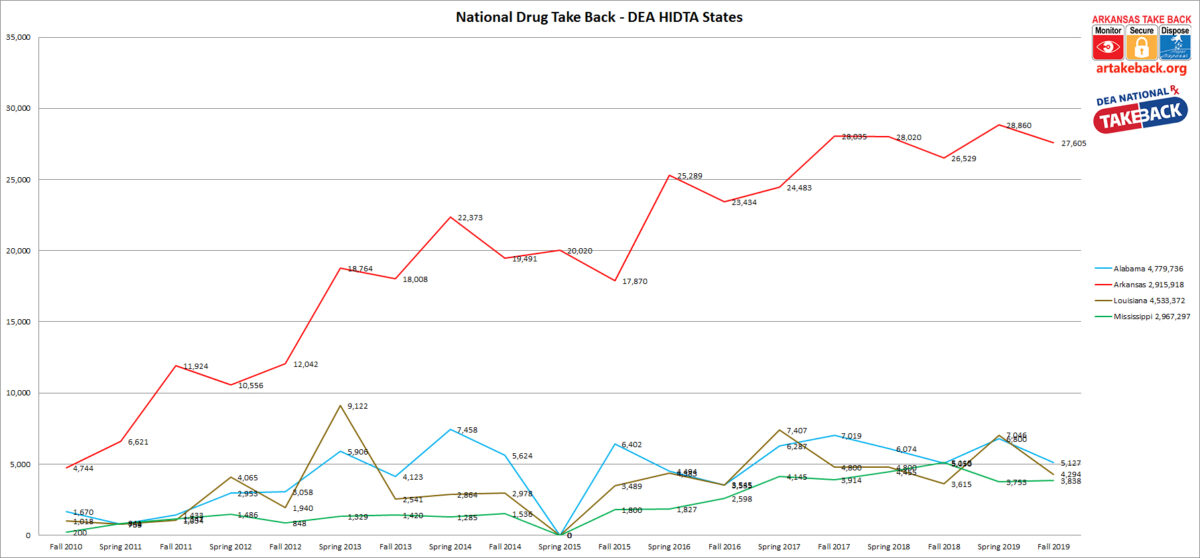
Arkansas continues to lead the four-state DEA region (Alabama, Arkansas, Louisiana, and Mississippi) accounting for 66% of all the medications collected. Arkansas also averages more participating law enforcement agencies than the other three states combined.

Arkansas Drug Take Back Day History

The Office of National Drug Control Policy (ONDCP), as part of its National Drug Control Strategy, called for an increase of prescription drug return and disposal programs as a means to curbing prescription drug abuse. Simultaneously, the Benton Police Department started a program called “Operation Medicine Cabinet” in the spring of 2010,  after Russell Goodwin, owner of a local monument company and youth baseball coach, told then Benton Police Chief Kirk Lane that he was “tired of making headstones for children” he knew due to the abuse of prescription drugs. Benton officers gathered data that showed there was a problem with abuse and misuse of prescription drugs by youth, including information from the Saline County Coroner’s Office which showed that 30 people died in 2009 as a result of prescription drug abuse.

More than 146 pounds of prescription medications were collected at the first Operation Medicine Cabinet in Benton back in the spring of 2009, and the program and education to the public continued growth. State officials took notice and the program expanded. In 2010, a coalition led by then, State Drug Director Fran Flener, launched an on-going educational program to encourage everyone to “Monitor, Secure and Dispose” of their prescription medications. The also launched the website ardrugtakeback.org with an emphasis on educating and encouraging everyone to “Monitor, Secure, and Dispose” their prescription medications.

The U.S. Drug Enforcement Administration launched the National Prescription Drug Take Back Day on September 25, 2010 in response to an epidemic of controlled prescription drug (CPD) abuse in the United States.

Semi-annually a DEA Prescription Drug Take Back Day is held nationally.  Arkansas supports this with core partners from the Arkansas Governor’s Office, Arkansas Attorney General’s office, Arkansas Department of Health, Arkansas Department of Human Services, Arkansas National Guard, Arkansas Rotary Clubs, Arkansas State Board of Pharmacy, Arkansas State Police, Office of Arkansas Drug Director along with more than 130 additional law enforcement and government agencies, numerous community organizations, businesses, media outlets, and public health providers. The Office of the Arkansas Drug Director works closely with the DEA in the coordination of this growing coalition, and in maintaining the Artakeback.org website.

One key to its success is the ability to have permanent collection boxes located at key locations throughout Arkansas communities. This allows the public to dispose of their unwanted medications throughout the year. Currently, Arkansas has more than 225 of permanent collection boxes, with at least one in every county in Arkansas. To find a collection box on ardrugtakeback.org click on the Collection Sites tab (or click this link: https://ardrugtakeback.org/take-back/collection-sites/ ) and type in a zip code, choose a distance and click the filter tab.

As part of the “Monitor, Secure, and Dispose” effort, the coalition organized Arkansas’s participation in the DEA’s National Prescription Take-Back Initiative, and take back events took place on September 25, 2010, April 30, 2011, October 29, 2011, April 28, 2012, September 29, 2012, April 27, 2013, October 26, 2013,  April 26, 2014, and September 27, 2014.   DEA announced the discontinuation of the national initiative in September 2014, but an Arkansas take back event under the leadership of partners within the state was held on April 25, 2015.   DEA then reinstated the program nationally, and events since have been held on September 26, 2015, April 30, 2016, October 22, 2016, April 29, 2017, October 28, 2017, April 28, 2018, October 27, 2018, April 27, 2019, and October 26, 2019. [DISCLAIMER: **Collectively, there have been 18 total Arkansas Drug Take Back Day events, and 17 national events. Results from the State Take Back in spring 2015 were rolled into the total results for National Take Back 10 held September 26, 2015.]

Due to the commitment, dedication, and effort of the Arkansas Law Enforcement Community, its partners, and the multi-agency coalition, and due to excellent participation by Arkansans in all areas of the state, the take back events have been successful above and beyond all expectations.

The 18th Drug Take Back Day resulted in a total medications collection of 441.5 tons nationally and 13.8 tons in Arkansas. The grand total of all Drug Take Back Day events have resulted in 11,669.60 tons nationally and 187.227 tons in Arkansas.


STATISTICAL INFORMATION – National Comparison (Including all 18 events):

Arkansas ranked #3 nationally in pounds collected per capita with 0.125 pounds per person. Maine ranked 1st with 0.308 pounds per person and Wisconsin ranked 2nd at 0.126 pounds per person.1

Despite being thirty-third in population among all states, Arkansas ranked #13 in total weight1

Arkansas ranked 9th in the amount of law enforcement agency participation with 192. Texas ranked 1st with 299 agencies. Washington D.C. ranked last with 1 agency. Nationally, 4,896 law enforcement agencies participated.2

Arkansas ranked 13th in the number of collection sites with 183. Texas ranked 1st with 363 and North Dakota was last with 5.

The four-state DEA region consisting of Alabama, Arkansas, Louisiana, and Mississippi pooled a total weight of 40,864 pounds for the 18th Drug Take Back Day and 569,680 pounds for all 18 Drug Take Back Day events. Arkansas, despite being the least populated state of the DEA region accounted for 66% of the total weight. Arkansas also averages more law enforcement participation than the other three states combined.


For Take Back 18, only:

Arkansas ranked #13 nationally in weight collected (#1-#12: California, Texas, Wisconsin, New York, Illinois, Pennsylvania, Ohio, Missouri, Maine, Florida, Massachusetts, & Virginia)

Ranked 4th per capita. Maine ranked #1, followed by Vermont, and Wisconsin, respectively.

Ranked 9th in the number of Law Enforcement agencies participation.

Ranks 13th in the number of registered collection sites.

1 Determined using 2017 census estimates. 2 Determined using data supplied by the National DEA.

STATISTICAL INFORMATION – Local Comparison:

Weight Collected Per Law Enforcement Agency (Take Back 18, only):

Pulaski County Sheriff’s Office ranked #1 with 3,752 pounds collected (14% of the state’s total)

Washington County Sheriff’s Office ranked #2 with 1,496 pounds collected (5.4% of the state’s total)

Benton Police Department ranked #3 with 1,065 pounds collected (3.9% of the state’s total)

Baxter County Sheriff’s Office ranked #4 with 1,019 pounds collected (3.7% of the state’s total)

North Little Rock Police Department ranked #5 with 857 pounds collected (3.1% of the state’s total)

State Chamber, Blue Cross and AFMC unveil opioid training kit for employers

The Arkansas State Chamber of Commerce, Arkansas Blue Cross and Blue Shield, and the Arkansas Foundation for Medical Care have developed an online training kit to help employers respond to the opioid crisis.

Together Arkansas was unveiled Wednesday (Nov. 6), at the Arkansas State Chamber of Commerce/Associated Industries of Arkansas annual meeting at the Statehouse Convention Center in Little Rock. Walmart is the digital outreach sponsor.

According to a press release from the initiative, the program provides an online course of five 13-16-minute modules covering legal and operational issues, drug testing, policies and procedures development, responding to an employee’s drug abuse, referrals for employees needing help, and returning an employee to work.

The free tools and other resources are available at this link.

“Opioid-use disorder is impacting Arkansas employers of every kind – from small operations to large corporations,” said State Chamber/AIA President & CEO Randy Zook. “It is creating daily challenges for employers because it affects their greatest asset: their employees.”

The press release quotes American Action Forum in saying that the opioid crisis reduced Arkansas’ labor force by 43,400 workers between 1999 and 2015. AAF on its website says opioids reduced the labor force participation rate by 3.8% during that time period. At the same time, prescription opioids per capita in Arkansas increased 1,946 percent during those years. Meanwhile, opioid dependency resulted in a loss of 574 million work hours. The majority – 327 million – involved absent female workers.

AAF’s website says opioid-use disorder resulted in the state’s economy losing $33.5 billion in real economic output during those years, reducing the state’s gross domestic product growth rate by 1.7%. The state’s economy grew 1.5% annually during that time, meaning it would have grown twice as fast were it not for opioids.

American Action Forum is a nonprofit organization that, according to its website, “proudly leads the center-right on economic, domestic, and fiscal policy issues.”

The Together Arkansas release quoted a National Safety Council Employer Survey saying that 75% of employers have had an issue with opioids.

DEA issues warning over counterfeit prescription pills from Mexico

WASHINGTON – The Drug Enforcement Administration is alerting the public of dangerous counterfeit pills killing Americans. Mexican drug cartels are manufacturing mass quantities of counterfeit prescription pills containing fentanyl, a dangerous synthetic opioid that is lethal in minute doses, for distribution throughout North America.

Based on a sampling of tablets seized nationwide between January and March 2019, DEA found that 27 percent contained potentially lethal doses of fentanyl.

“Capitalizing on the opioid epidemic and prescription drug abuse in the United States, drug trafficking organizations are now sending counterfeit pills made with fentanyl in bulk to the United States for distribution,” said DEA Acting Administrator Uttam Dhillon. “Counterfeit pills that contain fentanyl and fentanyl-laced heroin are responsible for thousands of opioid-related deaths in the United States each year.”

Fentanyl and other highly potent synthetic opioids remain the primary driver behind the ongoing opioid crisis, with fentanyl involved in more deaths than any other illicit drug.

A lethal dose of fentanyl is estimated to be about two milligrams, but can vary based on an individual’s body size, tolerance, amount of previous usage and other factors. The full Fentanyl Signature Profiling Program Report on the recent drug sampling and testing is available here: https://admin.dea.gov/sites/default/files/2019-10/DEA_Fentanyl_Signature_Profiling_Program_Report-Oct-2019.pdf.

DEA National Drug Take Back Day Collections Successful in Arkansas Despite Rain

[foogallery id=”4003″]

Undeterred by the rainy-cold weather across the state last Saturday, Arkansans made for another successful Arkansas Drug Take Back Day. Within hours, 141 law enforcement agencies collected 27,605 pounds of medications and vape/e-cigarette pens.

“We are grateful that even though many other events were happening and despite the cold and rain, a lot of people still drove out to Take Back Day locations all over the state,” said Arkansas Drug Director Kirk Lane. “Getting all those unneeded and expired medications out of medicine cabinets, or anywhere they are stored in the home, to a Take Back Day event site ultimately will save lives by keeping them out of the hands of those who will misuse them. This program also keeps them out of the water supply, as we’ll have them destroyed in an environmentally safe method at a local facility.”

DEA Special Agent in Charge Justin King added, “The success of the recent DEA National Prescription Drug Take Back Day shows the need for this initiative as a tool in the fight against the opioid crisis. The DEA is committed to preventing drug addiction and overdose deaths in the U.S. and we would like to thank the citizens of Arkansas for helping to make a difference and keep our communities safe.  We would also like to thank the state agencies, medical community, and law enforcement who participated in the event.”

The 141 law enforcement agencies were joined by a multitude of volunteers (including pharmacists, pharmacy students, physicians, local leaders, etc.) at 195 event day locations throughout the state. For anyone who missed the Arkansas Drug Take Back Day with medications to dispose of, there are more than 225 permanent and secure drop box locations in the state, and many are available 24-hours. To find a location click the Collection Sites tab on this website, type in the zip code, choose a distance and hit the filter tab. Each permanent drop box is designated to be emptied on a daily basis by law enforcement officers.

Locations can also be found through the NARCANsas app, a free opioid overdose resource containing tools that will help you administer the drug naloxone in the moment of an opioid overdose and provide steps on how to save a person’s life in the event of an opioid overdose. The app also provides links to treatment centers, prevention information, recovery centers, and more.

Of the 141 law enforcement agencies, Pulaski County Sheriff’s Office collected the largest amount at 3,752 pounds. The Washington County Sheriff’s Office was second after they collected 1,496 pounds. The Benton Police Department came in third with 1,065 pounds collected.

All the medications collected during the 18th Arkansas Drug Take Back Day, as were previous events, were transported via the Arkansas National Guard to a facility for environmentally safe destruction.

Did you know? In Arkansas, there were 379 drug overdose deaths in 2016, which increased to 416 drug overdose deaths in 2017 and increased to 426 in 2018. Arkansas ranks second in the nation for per capita opioid prescriptions, at 102.1 per 100 residents; the national average is 58.7 prescriptions per 100 persons. In nearly a decade (since 2000) deaths involving opioids has increased by 200% in the U.S.

Prescription medicines are a toxic waste & pose a danger to people, pets, & the environment if they are not disposed of properly. Medicines flushed or poured down the drain end up in the waterways, affecting our drinking water.

Throwing medications in the trash, even if they are mixed with materials such as kitty litter or coffee grounds, will still make it to a landfill and seep through the soil and into ground water. There’s also a danger of people and/or pets finding medications in the trash – The Animal Poison Control Center said 17.5% (34,888) of pet poisoning calls in 2017 were attributed to prescription medications.

Two-thirds of teenagers & young adults who report abuse of prescription medications say they get the majority of the medications from friends, family & acquaintances.

  • DON’T leave medication bottles or pill cases lying around
  • DON’T store medicines in an unsecured medicine cabinet or bathroom drawer
  • DON’T ignore warning signs (Ex: bottles tampered with, pills missing or drugged behavior of someone in your home)
  • DO lock up medications in a lock box or hide them in a safe place
  • DO keep track of medications – count pills, make marks on liquid containers
  • DO keep track of refills – refilling medicine more often than expected can indicate a problem
  • DO encourage relatives, friends & neighbors to monitor medications & participate in the Arkansas Drug Take Back Day.

The nARcansas app was created in a partnership with the Office of Arkansas Drug Director, Criminal Justice Institute, Division of Aging, Adult and Behavioral Health Services and Team Si. Naloxone is available for purchase by the public at some pharmacies throughout Arkansas.

Hands-On Experience: Harding Students Will Serve At Multiple AR Drug Take Back Day Sites

Students attending the Harding University College of Pharmacy are taught daily on the totality of prescription medications from their history, chemistry makeup, function in a human body, the reaction in the human body, state and federal laws, and similar topics, including how to properly dispose of medications. There is more beyond the classroom curriculum and the late-night studying says Jeanie Smith, Associate Professor and Experiential Education Director.

Harding Pharmacy students previously hosted an Arkansas Drug Take Back Day site on the campus, but Prof. Smith has expanded their volunteer opportunities outside the school grounds. Twenty-one students will volunteer at eight different Walmart locations in the state where Arkansas Drug Take Back Day event sites are being held. The students will volunteer alongside law enforcement officers, Speak Up About Drugs, and community members.

“Since we have students from across the state, it’s great to send students to their hometowns to serve,” Smith said. “In the classroom, we teach our students about drug disposal and the laws surrounding drug take back events, but for them to volunteer and see how an event operates, is a much more valuable experience.”

Students at Harding University College of Pharmacy are required to serve a set amount of volunteer hours each semester. The initial sign up for the Arkansas Drug Take Back Day was prompted by fulfilling those volunteer hours, but Junior-student Madison Everett said there are other opportunities.

“I am an intern at a pharmacy and get drug disposal questions all the time,” Everett said. “The Drug Take Back Day is a great way to dispose of those medications, and it is also a great way to educate the community about the field of pharmacy and the opioid epidemic. It also helps pharmacy students to connect with community members. We learn communication skills that we can’t learn in the classroom.”

Freshman student Savannah Wright added, “I decided to volunteer for the drug take back because it’s a unique way to give back to the community while promoting medication safety.”

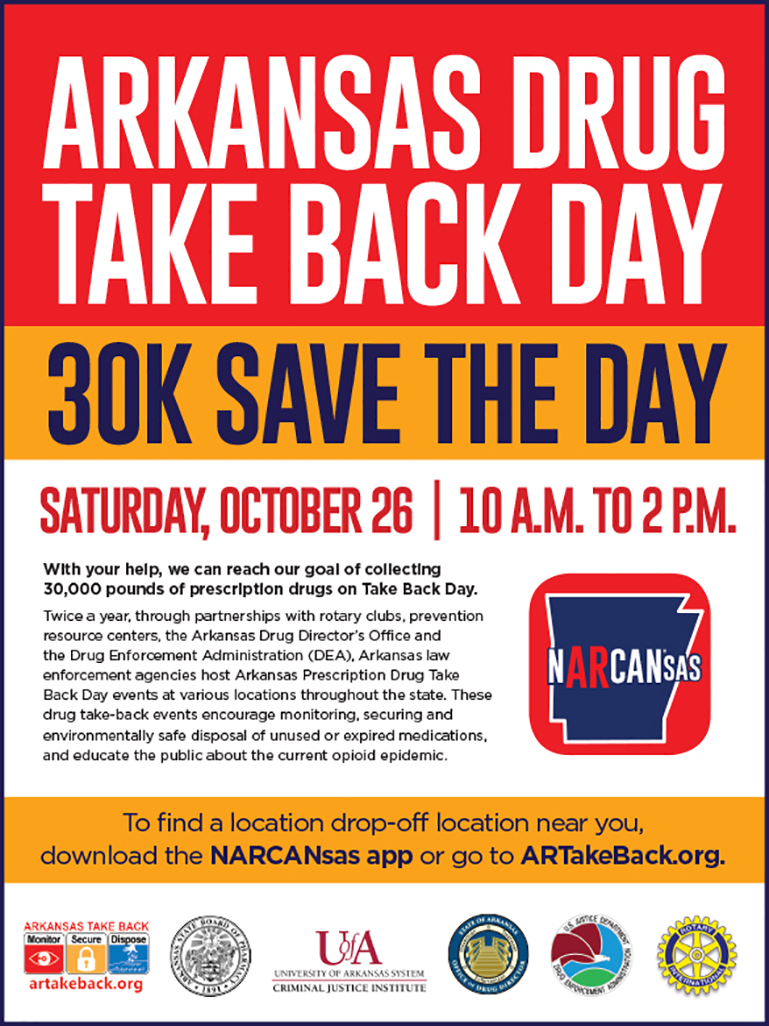
The theme of the 18th Arkansas Drug Take Back Day is “30K Save the Day” in which the participants are hopeful to break the previous record of just under 29 thousand pounds of collected medications. All locations are now collecting Vape/e-cigarette devices (just remove the battery) as well.

The “30K Save The Day” Arkansas Drug Take Back Day will be from 10 a.m. – 2 p.m. Saturday, October 26, 2019, and will include more than 250 locations across the state. Hundreds of volunteers and first responders will be at those locations encouraging citizens to dispose of unused or expired medications and officers will not ask for any identification or other questions regarding the prescriptions being dropped off.

The prescription medications will later be counted for statistical purposes and destroyed at a facility in an environmentally safe manner. Prescription medicines are a toxic waste & pose a danger to people, pets, & the environment if they are not disposed of properly. Medicines flushed or poured down the drain end up in the waterways, affecting our drinking water.

Throwing medications in the trash, even if they are mixed with materials such as kitty litter or coffee grounds, will still make it to a landfill and seep through the soil and into ground water. There’s also a danger of people and/or pets finding medications in the trash – The Animal Poison Control Center said 17.5% (34,888) of pet poisoning calls in 2017 were attributed to prescription medications.

To find locations throughout the state click here: https://ardrugtakeback.org/take-back/collection-sites/ and type in a zipcode.

While there, be sure to download the NARCANsas app- a free resource containing tools to administer naloxone, an opioid antagonist, in the moment of an opioid overdose and continued steps to save a person’s life. Though it should be used in an emergency situation only, Naloxone has no effect on non-opioid overdoses.

In Arkansas, there were 379 drug overdose deaths in 2016, which increased to 416 drug overdose deaths in 2017 and increased to 426 in 2018. Arkansas ranks second in the nation for per capita opioid prescriptions, at 102.1 per 100 residents; the national average is 58.7 prescriptions per 100 persons. In nearly a decade (since 2000) deaths involving opioids has increased by 200% in the U.S.

Two-thirds of teenagers & young adults who report abuse of prescription medications say they get the majority of the medications from friends, family & acquaintances.

  • DON’T leave medication bottles or pill cases lying around
  • DON’T store medicines in an unsecured medicine cabinet or bathroom drawer
  • DON’T ignore warning signs (Ex: bottles tampered with, pills missing or drugged behavior of someone in your home)
  • DO lock up medications in a lock box or hide them in a safe place
  • DO keep track of medications – count pills, make marks on liquid containers
  • DO keep track of refills – refilling medicine more often than expected can indicate a problem
  • DO encourage relatives, friends & neighbors to monitor medications & participate in the Arkansas Drug Take Back Day.

The nARcansas app was created in a partnership with the Office of Arkansas Drug Director, Criminal Justice Institute, Division of Aging, Adult and Behavioral Health Services and Team Si. Naloxone is available for purchase by the public at pharmacies throughout Arkansas.

‘30K Save The Day’ Theme Announced For 18th Arkansas Drug Take Back Day

Among the many goals of the 18th Arkansas Drug Take Back Day is the opportunity for Arkansas residents to set a new record by dropping off 30,000 pounds of prescription medications. The“30K Save The Day” theme also promotes the overall goal of saving lives.

“We’ve came close in years past to reaching the 30,000 pound goal,” said Arkansas Drug Director Kirk Lane. “The more we can get people to monitor, secure and properly dispose of the medications, the more we can save lives through less accessibility of those that can intentionally or unintentionally abuse or misuse them. The educational opportunities about prevention with ‘30K Save The Day’ is also an important goal, alongside the collection and environmentally safe disposal aspect.”

The “30K Save The Day” Arkansas Drug Take Back Day will be from 10 a.m. – 2 p.m. Saturday, October 26, 2019, and will include more than 250 locations across the state. Hundreds of volunteers and first responders will be at those locations encouraging citizens to dispose of unused or expired medications and officers will not ask for any identification or other questions regarding the prescriptions being dropped off.

The prescription medications will later be counted for statistical purposes and destroyed at a facility in an environmentally safe manner. Prescription medicines are a toxic waste & pose a danger to people, pets, & the environment if they are not disposed of properly. Medicines flushed or poured down the drain end up in the waterways, affecting our drinking water.

Throwing medications in the trash, even if they are mixed with materials such as kitty litter or coffee grounds, will still make it to a landfill and seep through the soil and into ground water. There’s also a danger of people and/or pets finding medications in the trash – The Animal Poison Control Center said 17.5% (34,888) of pet poisoning calls in 2017 were attributed to prescription medications.

To find locations throughout the state, go to ardrugtakeback.org and look for the Collection Sites tab (or click this link: https://ardrugtakeback.org/take-back/collection-sites/ ) and type in your zip code. The site will continue to update locations throughout the month until the event date. While there, be sure to download the NARCANsas app- a free resource containing tools to administer naloxone, an opioid antagonist, in the moment of an opioid overdose and continued steps to save a person’s life. Though it should be used in an emergency situation only, Naloxone has no effect on non-opioid overdoses.

In Arkansas, there were 379 drug overdose deaths in 2016, which increased to 411 drug overdose deaths in 2017. Arkansas ranks second in the nation for per capita opioid prescriptions, at 107 per 100 residents; the national average is 58.7 prescriptions per 100 persons. In nearly a decade (since 2000) deaths involving opioids has increased by 200% in the U.S.

Two-thirds of teenagers & young adults who report abuse of prescription medications say they get the majority of the medications from friends, family & acquaintances.

  • DON’T leave medication bottles or pill cases lying around
  • DON’T store medicines in an unsecured medicine cabinet or bathroom drawer
  • DON’T ignore warning signs (Ex: bottles tampered with, pills missing or drugged behavior of someone in your home)
  • DO lock up medications in a lock box or hide them in a safe place
  • DO keep track of medications – count pills, make marks on liquid containers
  • DO keep track of refills – refilling medicine more often than expected can indicate a problem
  • DO encourage relatives, friends & neighbors to monitor medications & participate in the Arkansas Drug Take Back Day.

The nARcansas app was created in a partnership with the Office of Arkansas Drug Director, Criminal Justice Institute, Division of Aging, Adult and Behavioral Health Services and Team Si. Naloxone is available for purchase by the public at pharmacies throughout Arkansas.

Arkansas Attorney General to Host “Youth Vaping Summit”

Arkansas  Attorney General Leslie Rutledge will host the “Youth Vaping Summit” on Monday, October 7th at Arkansas Children’s Hospital in Little Rock. A second day will be on Wednesday, October 9th at Bentonville High School in Northwest Arkansas. You can register at www.ArkansasAG.gov/Vape.

From Arkansas Attorney Leslie Rutledge:

This year I have been hearing a consistent and disturbing theme from every corner of the state regarding the dramatic increase of teens and pre-teens using vaping/e-cigarette products.  I have heard from school administrators, educators, and law enforcement officials who are deeply concerned about the popularity and ease of access to e-cigarettes which has created a youth vaping epidemic in many schools and towns across Arkansas.  This is why I’m launching my “GenZ Nic Free” campaign to better educate parents, students, and teachers on the dangers of vaping and to ensure that bad actors in the e-cigarette industry are held accountable for their actions.  I would like to invite you to attend one of our upcoming Youth Vaping Summits where we will provide you with great speakers and resources on the dangers of youth vaping.

The myths and lack of factual information about vaping have only worsened the problem.  Teachers have even shared stories with me about how parents are aware of their children vaping, but they see no reason to intervene as they falsely believe it to be perfectly safe and a better alternative than other vices.  However, this could not be further from the truth. Not only is it illegal for anyone under the age of 19 to possess or purchase e-cigarette products in Arkansas, but the truth is that the long-term effects of teen vaping are highly unknown and the vaping industry is currently under-regulated.  Unlike the tobacco industry, Arkansas teens who chose to vape really have no guarantee of the quality or the quantity of the chemicals they are inhaling and are often consuming the nicotine-equivalent of an entire pack of cigarettes in a single e-cigarette pod. 

I believe that if we saw a mass of Arkansas students start smoking a pack of cigarettes a day, parents would be storming the State Capitol.  But because of the vaping industries’ deceptive marketing practices and disinformation campaigns, many parents likely do not have the facts they need to make the best decisions for their child’s well-being.  I strongly encourage you and your colleagues to be a part of this coalition to snuff out vaping in Arkansas schools. Our kids are counting on us. 

For more information about this initiative and to register for an upcoming Youth Vaping Summit on Monday, October 7th  at Arkansas Children’s Hospital in Little Rock, or on Wednesday, October 9th at Bentonville High School, please visit www.ArkansasAG.gov/Vape.

Naloxone Access Among Top Priorities in Public Health

Little Rock, Ark. – The Centers for Disease Control and Prevention (CDC) released a new study on Aug. 6 about pharmacy-based naloxone dispensing, which showed the rate of naloxone prescription was far too low in relation to the number of high-dose opioid prescriptions. Naloxone is a medication that can reverse the effects of an opioid overdose and prevent overdose deaths, and it can be administered in a nasal spray called Narcan.

The CDC study found there to be only about one naloxone prescription for every 69 high dose opioid prescriptions in the United States. The CDC also found that naloxone prescriptions were less common in rural counties. Training and equipping those closest to in-need communities is a top public health priority.

In Arkansas, naloxone is widely available in pharmacies. A standing prescription from Secretary of Health Dr. Nate Smith allows Arkansans to request naloxone without a direct prescription from their doctor. However, physicians are encouraged to talk with their patients who are prescribed opioids about naloxone, and patients are encouraged to talk with their physicians about naloxone if they or someone they know uses opioids.

The Arkansas Department of Health (ADH), with a grant from the Substance Abuse and Mental Health Services Administration (SAMHSA), works to train and distribute Narcan to volunteer fire departments, homeless shelters, and crisis centers in an attempt to reduce opioid overdose-related deaths.

“We’ve seen that Arkansas is particularly affected by the opioid epidemic,” Dr. Smith said. “To be able to provide essential, lifesaving equipment to those most likely to be the first responder is a great step, and we plan to continue expanding this opportunity.”

Thanks to a similar SAMHSA and Blue and You Foundation grant-funded program with the Office of the Drug Director at the Arkansas Department of Human Services and in partnership with the Criminal Justice Institute, more than 4,630 first responders, treatment center employees and school nurses in Arkansas have been trained to use Narcan, with 3,931 kits distributed to date. Each kit includes two doses of Narcan. So far, there have been 279 identified overdose reversals as a result of this program.

“Naloxone enables someone to breathe during an opioid overdose,” Arkansas Drug Director Kirk Lane said. “It also enables a person who overdoses due to a high-dose opioid prescription or substance misuse disorder to live and have the ability to seek treatment and progress toward recovery. Having the ability to administer naloxone can make the difference between life and death.”

Lane’s office also has created an app called “NARCANsas” to educate Arkansans about opioid use disorder. It includes information about treatment, prevention, and recovery resources. It walks individuals through the steps of rescuing someone who has overdosed by administering naloxone and calling 911. It gives examples of the signs of an overdose and information about drug takeback efforts. It is available on both the Apple and Google app stores and has been downloaded 819 times.

The Drug Epidemic Is Landing More Kids in Foster Care Than Ever

The influx comes at a time when the foster care system is scrambling to adjust to major federal changes.


BY  JULY 25, 2019 AT 4:00 AM [from www.governing.com]

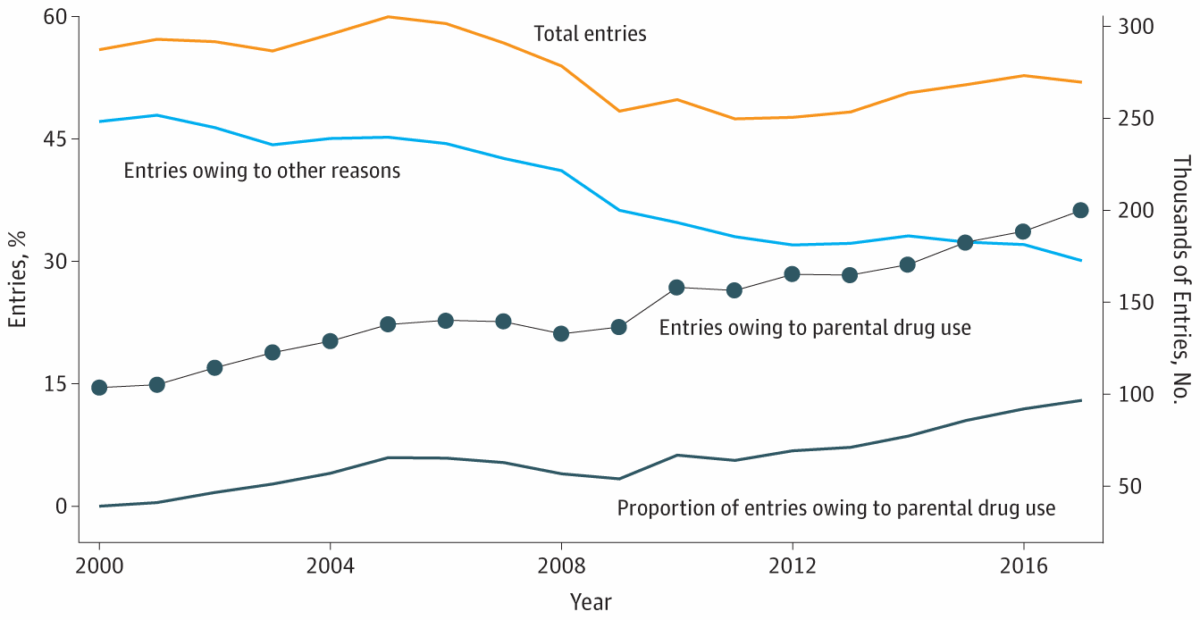
Since 2000, the number of children placed in foster care because of parental drug use has more than doubled, according to a study published in JAMA Pediatrics this month.

“I sort of already knew that there had been some increases in the foster care system, but I didn’t know to what extent. When I actually generated a graph, most of the increases were because of substance abuse,” says Angelica Meinhofer, one of the study’s researchers and a health-care policy instructor at Weill Cornell Medicine.

Using data from the Adoption and Foster Care Analysis and Reporting System, researchers found that child removals due to parental drug use rose 147 percent over the last two decades — from 39,130 in 2000 to 96,672 in 2017. Parental substance abuse now accounts for about a quarter of foster care entries across the country.

The results don’t surprise people working in the system.

“In Sarasota and the sun coast area, we’ve seen a 200 percent increase of kids coming into foster care over the past three or four years [because of substance abuse],” says Kurt Kelly, CEO of the Florida Coalition for Children. “In that area over a weekend, we could have two or three deaths. So if it’s a single mother with three or four kids, we have to take them all in.”

In Ohio, Mark Mecum, CEO of Ohio Children’s Alliance, says that the opioid epidemic has taken an “overwhelming toll” on the child protective system. Parental substance abuse in general, he says, is “the primary cause of children entering foster care,” he says.

Opioids aren’t the only drug to blame. About a decade ago, meth use was driving the rise in removals in Florida, says Kelly.

Family First

These troubling trends are playing out at a time when the foster care system is in the middle of a major overhaul. The Family First Prevention Services Act, which was signed by President Trump last year, will restructure the system to focus more on preventing family separations and reducing the dependence on group homes. The new law requires foster care entities to provide mental health care, in-home parenting programs and substance abuse treatment to parents at risk of losing their children.

Critics of the law argue that while its intentions are good, the outcomes might initially do more harm than good. With many foster care agencies already struggling to handle the number of kids, dramatically revamping the system to focus on keeping kids with families ignores the maxed-out realities and the lack of resources available to switch to a new framework.

“I do think Family First is trying to get us to be more interventions-focused by going into homes and having programs that can address these things before there are [overdose] deaths. But you have a functional policy that hasn’t even been clearly articulated,” says Kelly. “We’re going to be on shaky ground for the next three to four years.”

The federal government has been slow to communicate details about how the changes will play out. The law is set to go into effect in October, but the feds just released the first round of eligible programs for new federal funding in April. In part because of the delay in information, the vast majority of states are deferring implementation for two years.

Time will tell how Family First impacts the number of children placed in foster care because of drug use. In the meantime, Meinhofer hopes her study serves as a launching pad for more research on the issue.

“Where are these kids going? Do we have foster parents to absorb them?” Meinhofer asks. “Answers to those questions are what researchers and policymakers need to understand now.”

This appears in the Human Services newsletter. Subscribe for free.

Mattie Quinn Staff Writer [email protected]  |  @mattiekquinn